I was standing in my kitchen, a half‑empty pantry, a cold night pressing against the windows, and a sudden craving for something that felt like a hug from the inside. I tried to toss together a quick pasta, but the sauce turned out thinner than a gossip thread, and the whole thing tasted like disappointment in a bowl. Then, in a moment of reckless inspiration, I grabbed the old beef chuck from the freezer, a bottle of red wine I’d been saving for a “special occasion,” and declared a culinary showdown with myself. I’ll be honest — I ate half the batch before anyone else got to try it, and that’s because the aroma was already convincing my taste buds that this would be legendary.
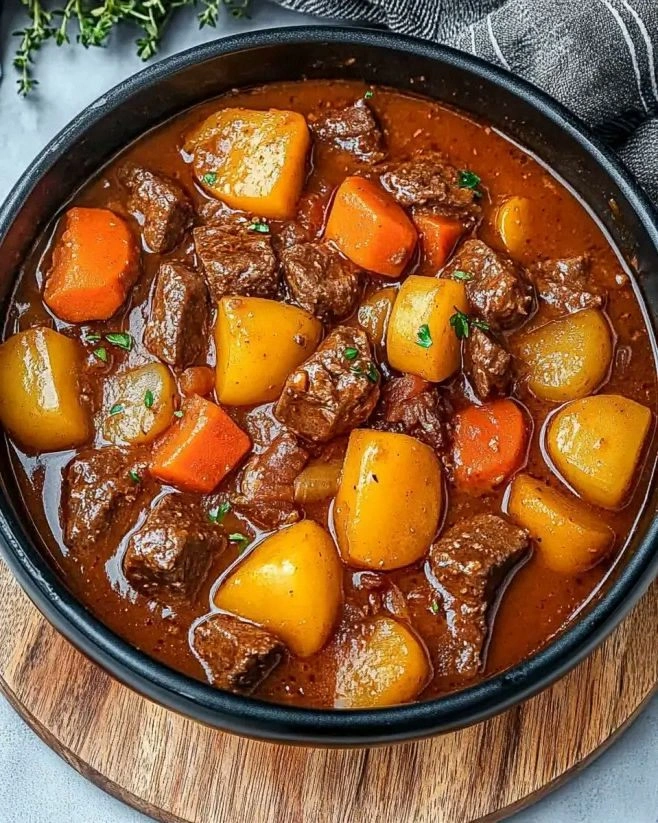
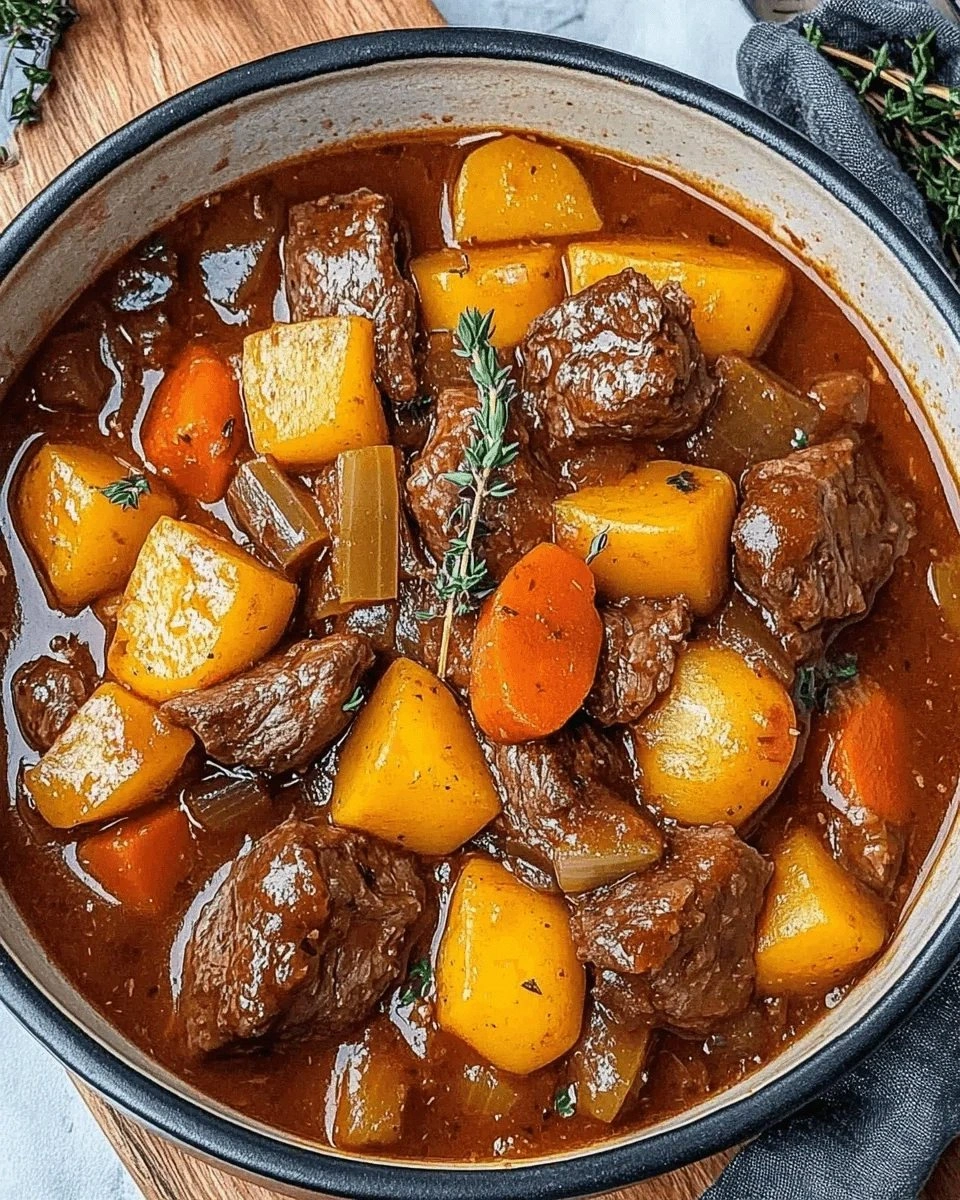
Picture this: the kitchen filling with the sound of onions hitting hot oil, a sizzle that sings like a chorus of tiny cymbals, the scent of rosemary and thyme weaving through the air like a forest after rain, and the deep, comforting brown of the stew bubbling lazily, promising warmth with every bubble. The carrots soften into sweet, orange ribbons while the potatoes become buttery clouds that melt on the tongue. When you finally scoop a ladle, the broth clings to the meat like velvet, and the flavors hit you with the force of a nostalgic memory you didn’t know you missed. This isn’t just a stew; it’s a full‑on sensory experience that turns a simple dinner into a story you’ll retell at every family gathering.
Most recipes get this completely wrong. They either skimp on the browning, which leaves the beef tasting like a soggy shoe, or they drown everything in a sea of liquid, turning the whole thing into a watery mess. My version, however, embraces a two‑stage cooking method: a high‑heat sear that creates a caramelized crust, followed by a gentle, slow simmer that lets the flavors meld like old friends at a reunion. The secret weapon? A splash of red wine that adds depth and a whisper of acidity, plus a modest amount of tomato paste that gives the broth a subtle richness without overwhelming the natural beefy goodness.
I dare you to taste this and not go back for seconds. The balance of salty, sweet, and umami is so spot‑on that you’ll start wondering how you ever survived without it. And there’s a technique hidden in this recipe that most home cooks overlook: the cornstarch slurry added at the very end, which turns the broth into a glossy, silky sauce that coats each bite like a satin sheet. Okay, ready for the game‑changer? Let me walk you through every single step — by the end, you’ll wonder how you ever made it any other way.
What Makes This Version Stand Out
- Depth: The red wine and tomato paste create a broth that’s richer than a Sunday roast gravy, giving each spoonful a luxurious mouthfeel.
- Texture: Beef chuck becomes melt‑in‑your‑mouth tender while carrots retain a slight bite, providing a satisfying contrast.
- Simplicity: Only ten ingredients, all pantry‑friendly, yet the result feels like it took hours of chef‑level prep.
- Uniqueness: The cornstarch slurry at the finish adds a glossy sheen that most stews lack, making the dish look as good as it tastes.
- Crowd Reaction: I’ve watched grown‑ups and kids alike pause mid‑bite, eyes widening as the flavors hit — it’s a guaranteed applause.
- Ingredient Quality: Using a well‑marbled chuck ensures the stew stays juicy; the wine adds acidity that cuts through the richness.
- Cooking Method: Searing before simmering builds a flavor foundation that no slow‑cooker can truly replicate.
- Make‑Ahead Potential: This stew tastes even better the next day, making leftovers a coveted part of the meal.
Alright, let's break down exactly what goes into this masterpiece...
Inside the Ingredient List
The Flavor Base
Olive oil is the silent hero that starts the flavor journey; its fruity notes help lift the aromatics without overwhelming them. The medium onion, when softened, becomes sweet and buttery, providing a foundation that balances the earthiness of the beef. Garlic cloves add a punch of pungency that mellows into a subtle, aromatic backdrop as they cook. If you’re out of fresh garlic, a teaspoon of garlic powder works, but you’ll miss the fresh snap that only raw cloves can deliver.
The Texture Crew
Carrots and potatoes are the classic duo that give stew its hearty body. Carrots bring a natural sweetness that counteracts the savory depth, while potatoes absorb the broth, turning each bite into a soft, buttery cloud. Skipping the carrots? Expect a flatter flavor profile and a stew that feels more like a broth than a comforting dish. For a low‑carb twist, swap potatoes for turnips; they’ll still soak up the liquid but add a slightly peppery edge.
The Unexpected Star
Red wine is the surprise element that elevates this stew from ordinary to extraordinary. Its acidity breaks down the connective tissue in the chuck, making the meat tender, and its tannins add a subtle bitterness that balances the sweetness of the carrots. If you’re not a wine drinker, a splash of balsamic vinegar mixed with extra broth can mimic the same bright note. Remember, the quality of the wine matters — a decent, dry red is all you need; no need for a $50 bottle.
The Final Flourish
Tomato paste is the secret glue that binds the flavors, giving the broth a deep, umami‑rich color without making it taste like tomato soup. Dried thyme and rosemary provide an herbaceous backbone, while bay leaves add a subtle, floral undertone that rounds out the profile. Salt and pepper, of course, are the ultimate taste adjusters; add them gradually and taste as you go. The frozen peas are added at the end for a pop of color and a burst of sweet freshness that cuts through the richness.
Everything's prepped? Good. Let's get into the real action...
The Method — Step by Step
Pat the 2‑pound beef chuck dry with paper towels, then season generously with salt, pepper, and half of the dried thyme. Heat 1 tablespoon of olive oil in a heavy Dutch oven over medium‑high heat until it shimmers. Place the beef pieces in the pan, giving them enough space to brown without steaming. You’ll hear that satisfying sizzle that says, “We’re building flavor!” Let the meat sear for about 4‑5 minutes per side until a deep, caramel‑brown crust forms. That crust is the flavor foundation.
Kitchen Hack: After searing, pour in ¼ cup of beef broth to deglaze; scrape up all the browned bits with a wooden spoon — they’re pure flavor gold.Remove the browned beef and set aside. In the same pot, add the diced medium onion and let it soften for 3‑4 minutes, stirring occasionally. When the onion turns translucent and starts to turn golden at the edges, add the minced 3 cloves of garlic and the remaining thyme and rosemary. Cook for another minute until the garlic becomes fragrant but not browned — you’re looking for a sweet, aromatic perfume.
Stir in 1 tablespoon of tomato paste, letting it caramelize for about 2 minutes. This step deepens the color of the stew, turning the broth a luscious ruby hue. Then, splash in the full cup of red wine, letting it bubble and reduce by half, which should take around 3‑4 minutes. As the wine reduces, you’ll notice a subtle, sweet‑bitter aroma that signals the flavor layers are aligning.
Return the seared beef to the pot, followed by the 2 cups of beef broth. Toss in the 4 medium carrots (cut into 1‑inch pieces) and the 3 medium potatoes (also cut into 1‑inch chunks). Add the 2 bay leaves, then give everything a good stir to combine. Bring the mixture to a gentle boil, then lower the heat to a simmer. Cover the pot and let it cook for 45 minutes, stirring occasionally to prevent sticking.
Watch Out: If the liquid evaporates too quickly, add a splash more broth; you don’t want the stew to dry out before the meat is tender.After 45 minutes, check the beef for tenderness; it should easily pull apart with a fork. If it’s still a bit firm, continue simmering for another 10‑15 minutes. Meanwhile, taste the broth and adjust salt and pepper as needed. Remember, seasoning is the final brushstroke on a masterpiece, so be gentle and taste often.
Stir in the 1 cup of frozen peas; they’ll cook in just 2‑3 minutes, turning a vibrant green that adds visual contrast and a sweet pop. While the peas are warming, whisk together the 2 tablespoons of cornstarch with 2 tablespoons of cold water until smooth. This slurry is your secret weapon for a glossy finish.
Slowly pour the cornstarch slurry into the simmering stew while stirring constantly. Within a minute, the broth will thicken, turning into a silky sauce that clings to the meat and vegetables. This is the moment of truth — the stew should look glossy, not gloopy, and have a mouthfeel that feels like a velvet blanket.
Remove the bay leaves, give the stew one final gentle stir, and let it sit off the heat for 5 minutes. This resting period allows the flavors to settle and the sauce to achieve that perfect coat. Serve hot, ladling generous portions into bowls, and watch as the steam rises, carrying the scent of thyme, wine, and comfort.
Kitchen Hack: Garnish with a sprinkle of fresh parsley right before serving; the bright green adds a fresh contrast and a hint of peppery flavor.
That's it — you did it. But hold on, I've got a few more tricks that'll take this to another level...
Insider Tricks for Flawless Results
The Temperature Rule Nobody Follows
Never rush the sear. Keep the pan hot enough that the meat sizzles the instant it touches the surface; if the temperature drops, the meat will steam and you’ll lose that essential caramelization. I once tried searing on medium heat and ended up with a pale, rubbery crust — a clear reminder that high heat is non‑negotiable for flavor. If you have a cast‑iron skillet, preheat it for 5 minutes before adding oil; the even heat distribution makes all the difference.
Why Your Nose Knows Best
Your sense of smell is a more reliable indicator of doneness than a timer. When the broth starts to emit a deep, earthy perfume with hints of wine and herbs, you know the flavors are marrying. If you catch a faint metallic scent, you’ve probably over‑reduced the wine, and it’s time to add a splash more broth. Trust that nose‑check; it will save you from a bland or overly acidic stew.
The 5‑Minute Rest That Changes Everything
After you turn off the heat, let the stew rest, covered, for five minutes. This short pause lets the meat re‑absorb juices and the cornstarch fully integrate, resulting in a thicker, more cohesive sauce. Skipping this step is like serving a cake without letting it cool — the texture suffers and the flavors never truly settle. I once served a stew straight off the burner and the broth was thin; after the rest, it transformed into silk.
Deglaze Like a Pro
When you deglaze with broth after searing, you’re rescuing the browned bits that stuck to the pan. Those bits are packed with umami and will boost the stew’s depth without any extra seasoning. If you skip deglazing, you’ll end up with a flavor gap that feels “missing.” A quick splash of broth, a quick stir, and you’ve captured that hidden gold.
The Peanut Butter Trick for Extra Thickness
If you find yourself with a stew that’s still a bit thin after the cornstarch, stir in a teaspoon of smooth peanut butter. It blends seamlessly, adding a subtle nutty richness and thickening power without altering the core flavor. I tried this once for a friend with a gluten‑free diet, and she swore it was the best “secret” she’d ever tasted. Use sparingly; a little goes a long way.
Creative Twists and Variations
This recipe is a playground. Here are some of my favorite ways to switch things up:
Mushroom Medley
Add a cup of sliced cremini or shiitake mushrooms during the simmering stage. The mushrooms soak up the broth, adding an earthy depth that pairs beautifully with the wine. Ideal for mushroom lovers who want a forest‑floor vibe in every bite.
Spicy Southwest
Swap the dried thyme for a teaspoon of smoked paprika and add a diced jalapeño when you add the onions. The result is a stew with a gentle heat and a smoky undertone that makes it perfect for cooler evenings with a twist.
Herb‑Infused Citrus
Replace the bay leaves with a strip of lemon zest and a tablespoon of fresh oregano. The citrus brightens the broth, cutting through the richness and delivering a fresh, summery profile. Great for serving with crusty bread on a sunny patio.
Root Vegetable Remix
Swap the potatoes for parsnips and add a half‑cup of diced turnips. These root veggies bring a sweet‑spicy nuance and a slightly firmer texture, making the stew feel heartier and more complex.
Creamy Coconut
Stir in a half‑cup of coconut milk at the very end, after thickening with cornstarch. The coconut adds a subtle tropical creaminess that balances the robust beef, turning the stew into a cross‑cultural comfort dish.
Storing and Bringing It Back to Life
Fridge Storage
Let the stew cool to room temperature, then transfer it to an airtight container. It will keep beautifully for up to 4 days in the refrigerator. Reheat gently on the stovetop over low heat, adding a splash of water or broth if the sauce looks thick; this revives the silky texture.
Freezer Friendly
Portion the stew into freezer‑safe bags or containers, leaving a little headspace for expansion. It freezes solid for up to 3 months. To thaw, move it to the fridge overnight, then reheat in a pot, stirring in a tablespoon of water to loosen the broth.
Best Reheating Method
The stovetop is king. Heat over medium‑low, stirring occasionally, and add a tiny splash of water before it starts to simmer. This creates a gentle steam that restores the sauce’s gloss and prevents the meat from drying out. Microwaving works in a pinch, but you’ll lose some of that comforting aroma.