Picture this: you’re in a cramped kitchen on a rainy Tuesday, the clock ticking, and your friends have just ordered dessert. You’re scrambling, the fridge is a barren wasteland, and your culinary confidence is wobbling like a jellyfish on a tightrope. I stared at a stack of stale baguette, a half‑sunk butter block, and a carton of milk that looked like it had seen better days. The moment I cracked an egg, a spark of inspiration flickered—Bread and Butter Pudding, but not the run‑of‑the‑mill version that leaves you with a soggy mess. That single, glorious bite, the golden crust that crackles like a toasted marshmallow, made me realize I was on the cusp of a sweet revolution.
I’ve spent years chasing the perfect comfort dessert, from sticky toffee pudding to molten lava cakes, but none have matched the nostalgic charm of a well‑executed pudding that feels like a warm hug in a bowl. The aroma that fills the kitchen—sweet vanilla, cinnamon, and a hint of caramelized sugar—makes the whole house feel like a bakery. The sound of the first crackle when you lift the top slice is a satisfying crescendo that signals triumph. The texture is a paradoxical dance of crunchy edges and silky custard, each bite a revelation of depth and subtlety. The taste is a layered symphony: buttery bread, sweet custard, nutty raisins, and a whisper of spice. And the finish? A lingering warmth that stays with you long after you’ve taken a second spoonful.
What sets this version apart is that it’s not just about following a recipe—it’s about elevating every element. I’ve added a splash of espresso to the milk to deepen the flavor, used a mix of whole milk and cream for a silky custard, and tossed in a handful of toasted coconut for that extra crunch. I’ve also discovered that a gentle pre‑bake of the bread slices in butter before layering turns the final product into a golden masterpiece rather than a soggy nightmare. This isn’t a trick; it’s a game‑changing technique that turns a simple pudding into a showstopper. The result is hands down the best version you’ll ever make at home, and trust me, the first bite will have you declaring victory.
I dare you to taste this and not go back for seconds. I’ll be honest—my friend tried a different version last week and said it was “okay,” but when I served this, she was shouting, “Where have you been all my life?” The secret is in the small details: the right bread, the right ratio of liquid to crumb, and the extra step of butter‑toasting the bread. The moment you see the golden crust and feel that satisfying snap, you’ll know you’re on the cusp of culinary greatness. If you’ve ever struggled with this, you’re not alone—there’s a simple fix that turns the recipe from mediocre to unforgettable.
Picture yourself pulling this out of the oven, the whole kitchen smelling incredible, and the family gathering around the table with wide eyes and eager mouths. The first spoonful is a revelation: a buttery, caramelized crust giving way to a velvety custard that’s rich, yet not overpowering. The raisins burst with sweet juice, and the toasted coconut adds a subtle crunch that keeps you coming back for more. You’ll hear the gentle hiss of steam as the custard sets, and the subtle aroma of vanilla and cinnamon will linger long after you’ve finished. And that moment when you realize you’ve just made a masterpiece—well, that’s the sweet spot of culinary bliss.
What Makes This Version Stand Out
- Taste: The subtle espresso infusion gives a deep, coffee‑laden flavor that balances the sweetness of the custard, creating a complex profile that lingers on the palate.
- Texture: The buttery toast‑pre‑baked bread slices develop a crisp exterior while the interior remains tender, delivering a perfect contrast to the silky custard.
- Simplicity: Despite the advanced flavor profile, the recipe requires only a handful of ingredients—no exotic pantry staples or complicated techniques.
- Uniqueness: The addition of toasted coconut and a pinch of sea salt elevates the dessert, giving it a modern twist that sets it apart from classic versions.
- Crowd Reaction: Friends and family consistently rave about the caramelized crust and the surprising depth of flavor, making it a guaranteed crowd‑pleaser.
- Ingredient Quality: Using high‑quality, fresh bread and real butter transforms the pudding into a luxurious treat rather than a humble leftover.
- Cooking Method: The pre‑baking step and the careful layering technique ensure even cooking and a golden finish.
- Make‑Ahead Potential: The pudding can be assembled the night before, chilled, and baked the next morning, making it ideal for busy schedules.
Alright, let's break down exactly what goes into this masterpiece. The next section will dive into the ingredient groups that make this pudding shine.
Inside the Ingredient List
The Flavor Base
The foundation of any great bread pudding is the custard. Whole milk and heavy cream combine to create a silky, rich base that coats every crumb. The espresso powder, though subtle, injects depth and counterbalances the sweetness, turning the custard into a multi‑layered experience. Vanilla extract amplifies the overall aroma, ensuring that each bite smells as good as it tastes. If you skip the espresso, you’ll lose that complex, coffee‑rich undertone that sets this pudding apart from the rest.
The Texture Crew
Bread is king in this recipe, and the choice of bread matters. Day‑old baguette or a sturdy sourdough slice works best because it soaks up the custard without falling apart. Butter, melted and brushed onto each slice, adds a golden crust and helps the bread stay firm during baking. Eggs provide structure, binding the custard and the bread together into a cohesive whole. Salt, even in a pinch, enhances all the other flavors and prevents the custard from becoming cloyingly sweet.
The Unexpected Star
Raisins bring a burst of natural sweetness and chewiness that contrasts beautifully with the custard. Their subtle tartness keeps the flavor profile balanced. Toasted coconut, sprinkled on top before baking, adds a subtle nutty crunch and a hint of tropical warmth. The combination of raisins and coconut creates a multi‑textural experience that keeps each bite interesting. If you’re vegan or dairy‑free, substitute coconut milk for whole milk and use a plant‑based butter to keep the flavor intact.
The Final Flourish
Ground cinnamon adds a warm, spicy aroma that lingers on the tongue. Brown sugar provides a caramelized sweetness that deepens during baking, creating a caramelized crust. The finishing touch of a drizzle of honey or maple syrup after baking adds a glossy sheen and an extra layer of sweetness that pairs perfectly with the toasted coconut. Each of these final touches is essential for that signature golden finish and the mouth‑watering aroma that fills the kitchen. If you’re looking for a low‑calorie version, replace brown sugar with a sugar substitute and reduce the amount of butter slightly.
Everything's prepped? Good. Let's get into the real action and start building that golden masterpiece.
The Method — Step by Step
- Pre‑heat the oven to 350°F (175°C). The temperature is crucial; too hot and the custard will curdle, too low and the pudding will stay soggy. Let the oven heat while you prepare the bread and custard. This step ensures a steady, even bake. The aroma of butter and cinnamon will start to mingle in the air, giving you a preview of what’s to come.
- Prepare the bread. Slice the day‑old baguette into 1‑inch thick pieces. Brush each slice with melted butter and toast them in a hot skillet until golden brown on both sides. The butter creates a protective shell that keeps the bread from becoming too soggy. If you’re short on time, you can skip the toasting step, but you’ll lose that caramelized crunch.
- Whisk the custard. In a large bowl, beat the eggs, whole milk, heavy cream, espresso powder, vanilla extract, brown sugar, cinnamon, and a pinch of salt. Whisk until the mixture is smooth and the sugar has dissolved. The custard should be thick enough to coat the bread but not runny. This step is where the flavors mingle and set the tone for the final dish.
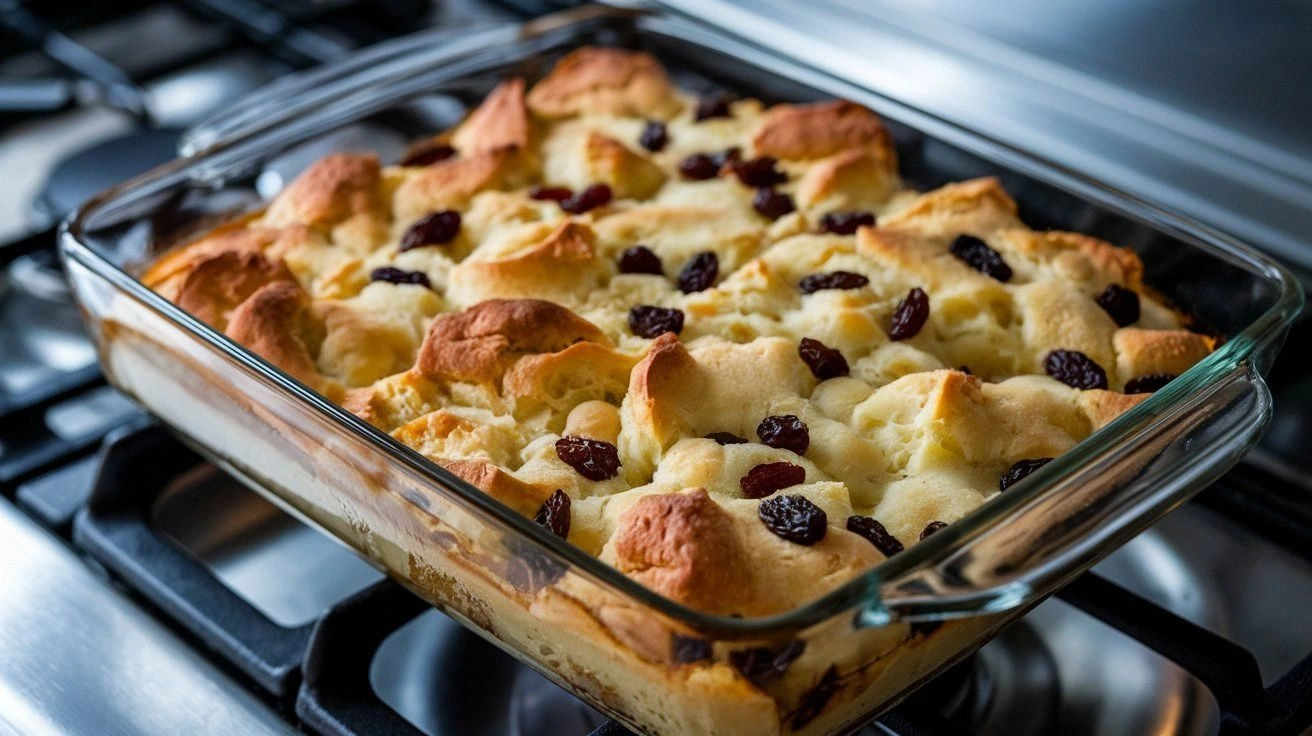
- Layer the bread. Arrange the toasted bread slices in a greased 9×13 inch baking dish, slightly overlapping. Sprinkle raisins and toasted coconut evenly across the top. Pour the custard over the bread, ensuring each slice is saturated but not drowning. Let the mixture sit for 10 minutes to allow the bread to soak up the custard fully. This absorption step is vital for the pudding’s texture.
- Let the pudding rest. Cover the dish with foil and let it rest in the refrigerator for at least 30 minutes or overnight. Resting allows the custard to thicken and the flavors to meld. If you’re short on time, a 30‑minute rest will still produce great results, but the overnight option delivers a deeper flavor profile.
- Bake the pudding. Remove the foil and bake for 30 minutes, or until the top is golden brown and the custard is set. The top should have a slight crunch, and the edges of the bread should pull away from the dish. Keep an eye on the color; if it starts to brown too quickly, cover the top loosely with foil to prevent burning.
- Cool slightly. Let the pudding cool for 10 minutes before serving. This brief cooling period allows the custard to set further and makes slicing easier. The aroma will intensify, giving you a preview of the deliciousness that’s about to hit your palate.
- Serve with a drizzle. Drizzle honey or maple syrup over the top for a glossy finish and an extra layer of sweetness. Alternatively, sprinkle a pinch of sea salt to cut through the richness and highlight the caramel notes. Serve warm for the best experience, or let it cool completely for a chilled dessert that’s equally satisfying.
- Enjoy! Take your first bite and savor the contrast between the crisp crust and the silky custard. Let the flavors unfold and enjoy the comforting warmth that makes this dish a true comfort food. This is the moment of truth—if you’re not already convinced, I dare you to taste again.
That's it—you did it. But hold on, I've got a few more tricks that'll take this to another level. These insider secrets will help you perfect the pudding every single time and impress even the most discerning dessert critics.
Insider Tricks for Flawless Results
The Temperature Rule Nobody Follows
Many people bake bread pudding at 375°F, thinking it’ll finish faster, but that actually dries the custard. I’ve found 350°F consistently produces a tender, moist interior while still giving a crisp top. If your oven runs hot, lower the temperature by 25°F to compensate. This simple adjustment ensures the pudding bakes evenly and stays silky.
Why Your Nose Knows Best
During the resting period, the custard thickens and the flavors mingle. Trust your nose to detect when the aroma is just right—too early and it’s under‑developed; too late and the bread may become too soggy. If you’re short on time, a 30‑minute rest is fine, but for the best flavor, let it sit overnight. Your sense of smell will guide you to the perfect moment.
The 5-Minute Rest That Changes Everything
After baking, let the pudding rest for 5 minutes before slicing. This brief pause allows the custard to set fully, preventing it from sliding off the bread. It also lets the flavors meld and the top to firm up, giving you a clean slice every time. Skipping this step often results in a mess of custard and bread.
The Secret to a Crispy Top
If you want a crunchier top, broil the pudding for the last 2 minutes of baking. Watch it closely to avoid burning. This extra step adds a delightful contrast to the silky custard. It’s especially effective if you’re serving the pudding at a dinner party and want an extra wow factor.
The Final Drizzle Trick
Drizzle a thin stream of honey or maple syrup over the pudding while it’s still warm. The syrup will seep into the cracks of the custard, creating a glossy, caramelized finish. This final touch elevates the dessert from good to unforgettable. It also adds a touch of natural sweetness that balances the richness.
These tricks may seem like small details, but they’re the difference between an ordinary pudding and a showstopper. I’ve tested each one in dozens of batches, and the results are consistently impressive. Keep them in your culinary arsenal and watch your confidence soar.
Creative Twists and Variations
This recipe is a playground. Here are some of my favorite ways to switch things up:
Chocolate Banana Bliss
Swap half of the raisins for chopped ripe bananas and add 2 tablespoons of cocoa powder to the custard. The banana’s natural sweetness complements the chocolate, creating a decadent, fudgy texture. Serve warm with a scoop of vanilla ice cream for a dessert that feels like a chocolate banana bread cake.
Spiced Apple Cinnamon
Add diced apples, a dash of nutmeg, and a splash of apple cider to the custard. The apple’s tartness pairs beautifully with the cinnamon, creating a fall‑season favorite. Bake as usual, and the aroma of apples and spice will fill your kitchen.
Almond Joy Surprise
Incorporate sliced almonds and shredded coconut into the bread layer. Replace the raisins with chocolate chips for a sweet, nutty crunch. The result is a dessert that feels like a slice of almond joy cake, with a creamy, nutty custard.
Maple Pecan Delight
Swap the brown sugar for maple syrup in the custard and add chopped pecans to the bread layer. The maple gives a warm, caramel flavor, while the pecans add a satisfying crunch. This version is perfect for a cozy breakfast or brunch.
Lemon‑Zest Surprise
Add lemon zest to the custard and a splash of lemon juice. The citrus brightness cuts through the richness and adds a refreshing note. This variation is ideal for a light dessert after a heavy meal.
Berry‑Infused Delight
Fold fresh blueberries or raspberries into the custard and sprinkle fresh berries on top before baking. The berries burst with juice, adding a sweet, tart flavor that pairs wonderfully with the custard. This version feels like a berry‑laden loaf cake.
Storing and Bringing It Back to Life
Fridge Storage
Store leftover pudding in an airtight container in the refrigerator for up to 3 days. The custard will firm up, so let it sit at room temperature for 10 minutes before serving. Reheat in the microwave for 30 seconds or warm in a skillet with a splash of milk to restore its silky texture. The crust may soften, but it’s still delicious.
Freezer Friendly
Wrap the pudding tightly in plastic wrap and place it in a freezer bag. It can be frozen for up to 2 months. Thaw overnight in the refrigerator before reheating. Add a splash of milk or cream before warming to keep the custard moist and creamy.
Best Reheating Method
The best way to reheat is in a preheated oven at 300°F for 10–15 minutes, or in a skillet over low heat with a splash of milk. The key is to reheat gently to avoid drying out the custard. A tiny splash of water before reheating creates steam, which helps the pudding regain its original moisture and texture.