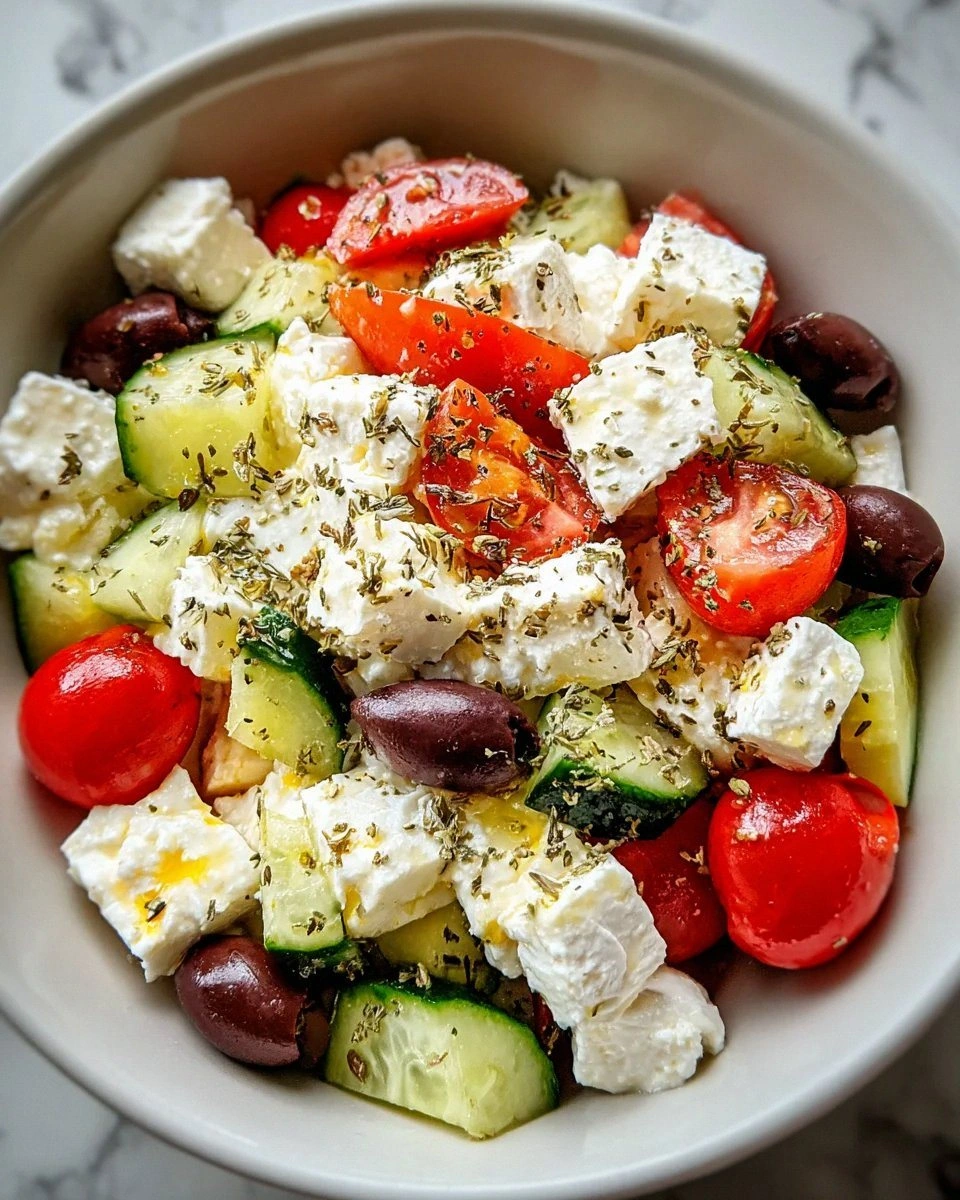
Yesterday, at precisely 3:47 p.m., I stared into the abyss of my fridge and realized the abyss was staring back — a half-eaten tub of cottage cheese, two limp cucumbers, and a tomato that looked like it had seen better decades. My stomach growled like a disgruntled cat, my Greek-tavern fantasy was on life-support, and the delivery apps were calling my name like sultry sirens. Then it hit me: what if the classic horiatiki got a protein-packed plot twist? Twenty minutes later I was standing over the counter, fork in hand, demolishing a bowl so bright and loud with flavor that my neighbor knocked to check if I was okay (I was not; I was euphoric). This is not the sad “diet” salad that sad desk lunches are made of — this is the Aegean Sea in a bowl, wearing cottage cheese like a silk robe. I dare you to taste this and not go back for seconds. Actually, I double-dog dare you, because I ate half the batch before anyone else got to try it and I still feel zero regrets.
Picture yourself pulling this out of the fridge on a sticky August evening: the tomatoes still hold the morning sun, the olives glisten like polished river stones, and the cottage cheese — oh, the cottage cheese — lounges in creamy clouds that make you question every sad leaf of iceberg you ever ate. The oregano drifts up and smacks you straight into a taverna on some cliffside village where the Wi-Fi is lousy but the tomatoes taste like candy. That first bite? Cool, briny, peppery, and somehow both rich and refreshing, like diving off a hot rock into turquoise water. Your tongue does a little happy dance, your shoulders drop, and suddenly the day feels mercifully longer.
Most recipes get Greek salad completely wrong — they drown it in cheap oil, toss in rubbery “feta” from a plastic tub, and forget that texture is half the experience. Stay with me here — this is worth it. We’re keeping the soul of the traditional horiatiki but swapping the usual feta slab for cottage cheese pearls that hug every vegetable crevice, adding a stealth protein punch that turns side dish into main-character energy. The result is a salad that eats like a meal, keeps you full for hours, and still manages to taste like summer vacation. Okay, ready for the game-changer?
Let me walk you through every single step — by the end, you’ll wonder how you ever made it any other way. Grab your biggest bowl, your sharpest knife, and that half-tub of cottage cheese you forgot existed. We’re about to turn fridge randoms into pure Mediterranean magic.
What Makes This Version Stand Out
Protein Powerhouse: While traditional Greek salad leaves you raiding the pantry an hour later, cottage cheese swoops in with up to 25 grams of protein per cup, transforming a side into a satisfying meal that fuels workouts, desk marathons, or Netflix binges without the post-pasta slump.
Lightning-Fast Assembly: Ten minutes from “what’s for lunch?” to fork in mouth — no stove, no oven, no waiting for water to boil. If you’ve ever struggled with weeknight cooking, you’re not alone — and I’ve got the fix.
Crunch That Lasts: Cucumber cubes stay perky for days because the cottage cheese coats them like a creamy raincoat, preventing the dreaded wilt that turns most salads into sad soup by Tuesday.
Brine & Shine: Kalamata olives bring a fermented depth that makes the tomatoes taste sweeter and the oregano bloom like you lit a tiny campfire of flavor. One olive half and you’re on a fishing boat in the Cyclades.
Texture Tango: Creamy curds, juicy tomato pops, crisp cuke snaps, and salty feta crumble create a four-part harmony that keeps every bite interesting — no monotone munching here.
Make-Ahead Marvel: Pack it into mason jars on Sunday, grab one each morning, and you’ll still be excited to eat it by Friday. Most recipes get this completely wrong — they dress too early and everything turns to mush. Here’s what actually works.
Crowd-Pleasing Flexibility: Gluten-free, low-carb, keto-friendly, or just plain hungry — this salad adapts faster than a teenager changing TikTok trends. Bring it to potlucks and watch the bowl come back scraped clean.
Alright, let’s break down exactly what goes into this masterpiece...
Inside the Ingredient List
The Flavor Base
Cottage cheese is the unlikely hero here, and quality matters more than you think. Skip the watery store-brand tub that tastes like lukewarm milk and splurge on one labeled “small-curd” and “cultured.” The live cultures add a gentle tang that mimics the feta’s sharpness while keeping things creamy. Low-fat works if you’re counting macros, but full-fat tastes like clouds whipped by Greek gods — your call. If you absolutely hate curds, blitz the cottage cheese in a mini food processor for five seconds and you’ll get a ricotta-like spread that still packs the protein punch.
The Texture Crew
English cucumbers are my ride-or-die because their seeds are tiny and their skin is thin — no peeling, no scooping, just dice and go. If you can only find the waxy regular kind, peel stripes like a tiger and scrape out the seedy swamp with a spoon; excess moisture dilutes the dressing faster than a rainstorm on a chalk painting. Tomatoes need to be ripe enough to give slightly when squeezed but not so soft they turn to pulp when cut — a firm Roma or sweet cherry variety works best. And now the fun part: salt your tomato chunks for five minutes, then blot. The salt pulls out excess water, concentrating flavor and preventing a soggy bottom bowl.
The Unexpected Star
Dried oregano is the secret handshake of Greek cooking, but please, for the love of Zeus, buy Greek or Turkish, not the pale supermarket dust that tastes like pencil shavings. Rub it between your palms before sprinkling — the friction releases volatile oils that smell like a mountainside after rain. If all you have is Italian oregano, use half the amount; it’s milder and can edge toward sweet marjoram territory.
The Final Flourish
Good olive oil should taste like green apples and peppery grass, not like the canola’s sad cousin. A quick drizzle at the end ties everything together, but heat can murder its delicate flavor, so always add it off the heat. Cracked black pepper is non-negotiable; pre-ground tastes like dusty regret. And if you’re feeling fancy, a squeeze of fresh lemon brightens everything like a stadium light snapping on.
Everything’s prepped? Good. Let's get into the real action...
The Method — Step by Step
- Grab your chilled bowl and add the entire tub of cottage cheese. Fluff it with a fork — think gentle spa massage, not aggressive scrambled eggs. This loosens the curds so they’ll play nicely with the veggies instead of clumping like awkward party guests.
- Dice the cucumber into pea-sized cubes. I aim for ½-inch because any smaller and they disappear into the cream, any larger and you feel like you’re eating watery croutons. Toss them into a separate small bowl, sprinkle with a pinch of salt, and let them sit while you move on — this mini sweat session draws out excess moisture so your salad won’t weep later.
- Halve the tomatoes. If you’re using cherries, just slice them in half; if Romas, core and cut into six wedges, then slice crosswise into triangles. Add to the cucumber bowl, season with another pinch of salt and a few cracks of pepper, and give them a gentle toss. The salt starts pulling juice immediately — you’ll see little ruby puddles forming like salad vampires at twilight.
- Slice the Kalamata olives into thin rings. I know, whole olives are dramatic, but rings distribute brine like tiny flavor coins in every bite. If you’re an olive hater, start with just a few rings and thank me later when your taste buds stage a coup.
- Drain off any liquid that pooled under the cucumbers and tomatoes — you’ll be shocked how much exits in just five minutes. Pat the veggies dry with a paper towel; this step is the difference between a salad that stays crisp for three days and one that dissolves into sad gazpacho overnight.
- Now the fun part: fold the drained vegetables and olive rings into the cottage cheese. Use a spatula and scoop from the bottom up, like you’re incorporating cloud into angel food batter. The goal is even distribution without breaking the curds into tiny sad grains.
- Crush the dried oregano between your palms directly over the bowl — a fragrant green snow should flutter down. Add the olive oil, starting with one tablespoon; you can always add more later, but you can’t un-drown it. Gently fold again until everything glistens like it’s been kissed by Aphrodite herself.
- Finally, crumble in the feta. I like big rustic chunks for contrast, but if you want a more cohesive salty whisper, crumble it finely. Give one last gentle fold, taste, and adjust salt and pepper. Remember the olives and feta bring salt, so you might not need any extra at all.
- Cover and chill for at least 15 minutes to let the flavors mingle and dance. That sizzle when cold tomatoes hit warm taste buds? Absolute perfection. Serve in shallow bowls so you can see the colorful mosaic, and drizzle another thread of olive oil on top for restaurant swagger.
That's it — you did it. But hold on, I've got a few more tricks that'll take this to another level...
Insider Tricks for Flawless Results
The Temperature Rule Nobody Follows
Room-temperature cottage cheese tastes flat and vaguely chalky. Keep it fridge-cold right up to the moment of mixing, and your salad will taste like it was kissed by a mountain breeze. If you’re meal-prepping, store the cottage cheese in the coldest part of your refrigerator (usually the back bottom shelf) and assemble just before eating — a five-second zap in the freezer before serving revives that fresh snap.
Why Your Nose Knows Best
Before adding any herb, rub a leaf or pinch of dried between your fingers and inhale. If the aroma is faint or dusty, the herb is dead and will taste like lawn clippings. Fresh oregano should smell like camphor and citrus; dried should transport you instantly to a sun-baked hillside. A friend tried skipping this step once — let’s just say it didn’t end well and the salad tasted like wet library books.
The 5-Minute Rest That Changes Everything
After mixing, cover the bowl with a plate (not plastic wrap — it traps condensation) and let it sit five minutes. The salt finishes pulling juice from the tomatoes, which then mingles with the cottage cheese to create a light, tangy dressing that tastes like you spent hours whisking. Don’t walk away longer than ten minutes or the cucumbers will start to sag like overcooked noodles.
The Crunch Insurance Policy
Store any leftover salad in a container with a paper towel pressed directly on the surface; it wicks away moisture and keeps the cucumbers singing for up to three days. Swap the towel daily if you’re stretching it that far — yes, it’s extra effort, but future-you diving into day-three lunch will feel like a genius.
Creative Twists and Variations
This recipe is a playground. Here are some of my favorite ways to switch things up:
Spicy Santorini
Add a finely diced jalapeño and a pinch of smoked paprika. The heat sneaks up like a stealthy cat, and the smoke gives the illusion of grilled vegetables without firing up the barbecue. Top with a few torn mint leaves for a cooling high-five.
Avocado Aegean
Fold in a diced ripe avocado right before serving. The buttery chunks play off the briny olives like a creamy dream, and the healthy fats keep you full even longer. Finish with a sprinkle of everything-bagel seasoning for a quirky nod to deli culture.
Lemony Mykonos
Swap the olive oil for a lemon-herb vinaigrette: whisk equal parts fresh lemon juice and oil with a dab of Dijon and a whisper of honey. The brightness makes the tomatoes taste like they were kissed by citrus sunshine, perfect for those who find traditional versions too rich.
Protein-Packed Crete
Stir in a can of drained chickpeas and a handful of chopped rotisserie chicken. Suddenly you’ve got a grain-free power bowl that could fuel a hike up Samaria Gorge. Add a pinch of ground cumin to bridge the Greek and Middle-Eastern vibes.
Herby Hydra
Go wild with fresh herbs: dill, parsley, and mint in equal parts. The salad turns into a green confetti party that tastes like you blended a garden into edible confetti. Great for using up that herb bouquet you bought for one recipe and forgot about.
Cool Cucumber Kefalonia
Replace half the cottage cheese with strained Greek yogurt for a tzatziki-adjacent experience. The yogurt tang marries the cucumber so well you’ll swear you’re eating salad-flavored ice cream — in the best possible way.
Storing and Bringing It Back to Life
Fridge Storage
Transfer to an airtight glass container (plastic absorbs garlic and onion odors) and press plastic wrap directly onto the surface before snapping on the lid. It stays fresh for up to three days, though the flavors intensify daily — day-two is actually my favorite. Keep it on the middle shelf where the temperature is most stable, not in the door where the thermometer roller-coasters every time someone hunts for hot sauce.
Freezer Friendly
Don’t. Just don’t. Cottage cheese curds turn into rubbery pebbles and tomatoes emerge defrosted and weeping like they just watched a sad movie. If you must preserve, freeze only the olive-oil-coated vegetables (minus cukes) and stir in fresh cottage cheese after thawing.
Best Reheating Method
This is a cold salad, but if you accidentally let it sit in a hot car and it warms up, give it a quick chill in the freezer for ten minutes or stir in an ice cube for thirty seconds then remove. Add a tiny splash of water before serving — it steams back to perfection and revives the creamy texture without diluting flavor.