I remember the night I tried to impress a group of foodie friends with a quick dinner, and the kitchen turned into a frantic stage of sizzling pans and frantic shouting. A salmon fillet slipped out of the pan, splattering across the counter, and I stared at the ruined mess while everyone else laughed at my culinary disaster. That moment of chaos became the catalyst for discovering a version of salmon that turned that calamity into a culinary triumph. The secret? A creamy dill sauce that clings to the fish like a velvet blanket, delivering a burst of freshness that lifts even the most ordinary fillet into a showstopper.
Picture the scene: the sharp scent of fresh dill cutting through the air, the gentle hiss of butter melting into a glossy base, and the bright citrus zing of lemon that wakes the senses. The sound of the salmon searing creates a satisfying crackle, while the steam rises like a fragrant cloud. Every bite delivers a harmony of silky cream, sharp dill, and the subtle brininess of capers—each element dancing in perfect balance. I dare you to taste this and not go back for seconds; the flavor profile is so compelling that even the most discerning palate will crave a repeat.
What sets this rendition apart isn’t just the ingredients; it’s the method that respects the salmon’s natural texture while coaxing out its full potential. The sauce is thick enough to cling without overpowering, yet light enough to let the fish shine. The balance of heat—just enough from the garlic and a hint of mustard—adds depth without drowning the delicate flavor. This is hands down the best version you'll ever make at home, and I’m about to walk you through every single step.
By the end of this guide, you’ll be able to produce a dish that feels like a gourmet experience without the fancy equipment. Picture yourself pulling this out of the oven, the whole kitchen smelling incredible, and guests lining up for seconds. Let’s dive in, and I promise you, the journey is as enjoyable as the destination.
What Makes This Version Stand Out
- Taste: The dill isn’t just a garnish; it’s the star, offering a bright, herbaceous punch that cuts through the richness of the cream.
- Texture: The sauce is silky yet substantial, coating the salmon like velvet while still allowing the flesh to stay tender and flaky.
- Simplicity: With only a handful of pantry staples and a few fresh ingredients, you can achieve restaurant‑grade flavor in under an hour.
- Uniqueness: A splash of white wine and a touch of Dijon mustard add depth, turning a classic into a nuanced masterpiece.
- Crowd Reaction: Guests often ask, “Where did you learn that?” because the sauce is so unforgettable.
- Ingredient Quality: Fresh, high‑quality salmon and hand‑picked dill make all the difference—nothing else can replace that.
- Cooking Method: Searing the fillets first locks in juices, then finishing in a sauce that keeps the fish moist and flavorful.
- Make‑ahead Potential: The sauce can be prepped ahead and reheated with a splash of milk to maintain silky texture.
Alright, let’s break down exactly what goes into this masterpiece. The next section will walk you through the ingredient groups and why each one matters.
Inside the Ingredient List
The Flavor Base
Heavy cream is the backbone of the sauce, providing a rich, velvety canvas that allows the dill to shine. A splash of white wine adds acidity, cutting through the cream’s heaviness and adding a subtle depth that keeps the dish from feeling flat. Dijon mustard brings a mild heat and a tang that balances the sweetness of the lemon juice. If you’re lactose intolerant, a coconut milk or a light Greek yogurt can substitute, but the cream’s texture is hard to replicate.
The Texture Crew
Butter is the secret to that golden sear on the salmon. It creates a crisp exterior while infusing the fish with a buttery richness that complements the sauce. Olive oil is used for the initial searing, providing a neutral base that allows the butter’s flavor to dominate without competing. The capers, though optional, add a briny burst that contrasts the creamy sauce and gives a pop of flavor that many forget to include. Skipping them results in a smoother but less complex dish.
The Unexpected Star
Fresh dill is the true hero of this dish. Its bright, slightly piney flavor elevates the salmon and the sauce, adding a herbal note that feels both fresh and comforting. If you can’t find fresh dill, a small pinch of dried dill works, but the aroma won’t be as vibrant. The key is to add the dill at the right moment—after the sauce has reduced—to preserve its bright flavor.
The Final Flourish
A squeeze of lemon juice brightens the entire plate, cutting through the richness and adding a zesty finish. Grated Parmesan adds a nutty undertone and a slight crunch when sprinkled on top. Fresh parsley, if used, offers a fresh green contrast that lifts the dish visually and flavor-wise. The salt and pepper are critical; too little and the dish will taste flat, too much and it will overpower the delicate salmon.
Everything's prepped? Good. Let's get into the real action.
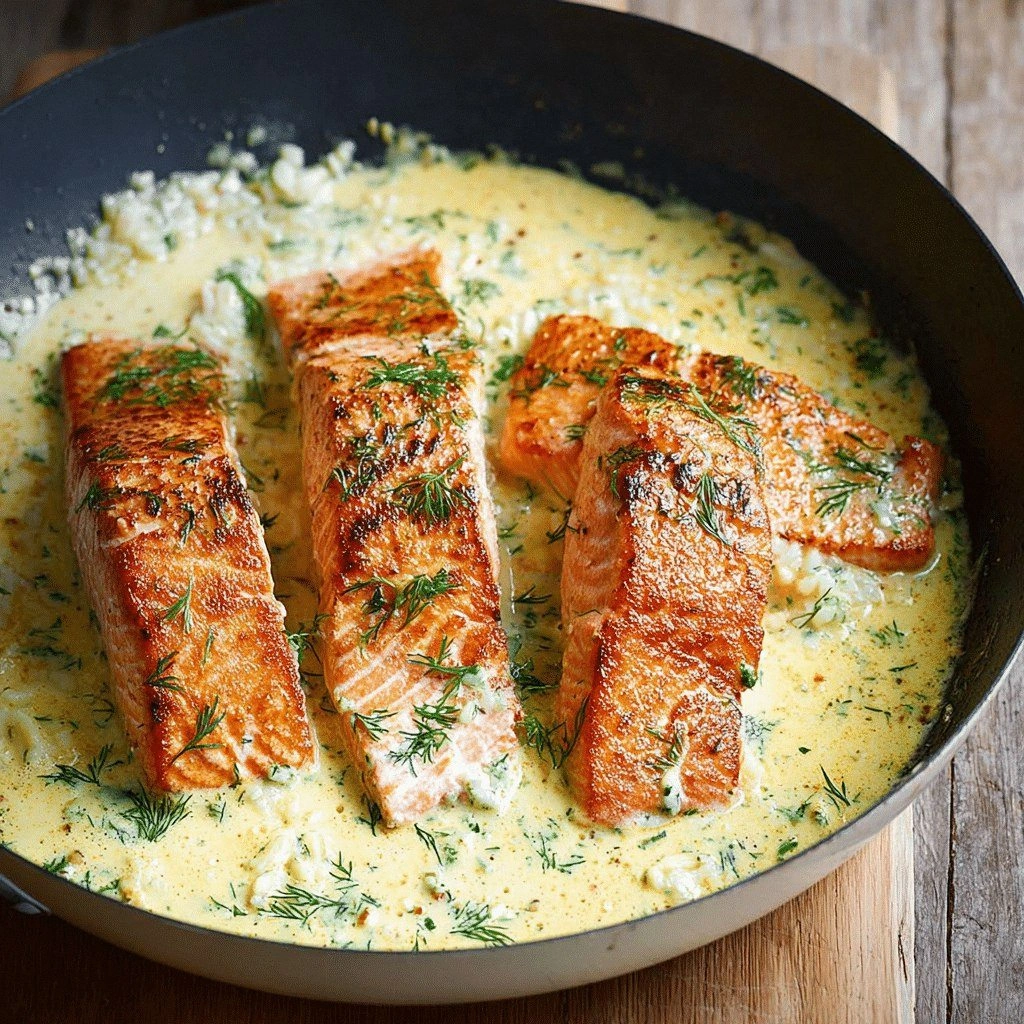
The Method — Step by Step
- Prep the Salmon: Pat the salmon fillets dry with paper towels; this ensures a crisp sear. Season both sides generously with salt and pepper. Let them sit at room temperature for 10 minutes to reduce cooking time and improve evenness.
- Heat the Pan: Place a large nonstick skillet over medium‑high heat and add 1 tablespoon of olive oil. Once the oil shimmers, add the salmon skin‑side down. Listen for that satisfying sizzle; it means the pan is hot enough.
- Sear the Salmon: Cook the fillets for 4–5 minutes on the skin side until a golden crust forms and the fish releases easily from the pan. Flip gently using a spatula and add 1 tablespoon of butter. Baste the fillets with the butter for 2 minutes, allowing the flavors to meld.
- Transfer to Oven: Preheat the oven to 375°F (190°C). Slide the skillet into the oven and bake for 6–8 minutes, depending on thickness, until the salmon reaches an internal temperature of 125°F for medium‑rare. The residual heat will finish cooking without drying out.
- Start the Sauce: While the salmon bakes, melt 2 tablespoons of butter in a saucepan over medium heat. Add 2 minced garlic cloves and sauté for 30 seconds until fragrant, being careful not to burn them.
- Deglaze: Pour in 1/4 cup of dry white wine, scraping the pan’s bottom to loosen any browned bits. Let the wine reduce by half, which concentrates its flavor and eliminates raw alcohol.
- Add Cream: Stir in 1 cup of heavy cream and bring to a gentle simmer. Reduce the heat to low and let it thicken for about 4 minutes, stirring occasionally so it doesn’t scorch.
- Finish with Flavor: Add 1 tablespoon of Dijon mustard, 2 tablespoons of fresh dill, 1 tablespoon of lemon juice, and 1 teaspoon of capers (if using). Season with salt to taste and pepper to taste. Let the sauce simmer for another 2 minutes, allowing the dill to infuse without losing its bright aroma.
- Plate: Remove the salmon from the oven and place on a warmed plate. Spoon the sauce over the fillets, ensuring each piece is coated. Garnish with a sprinkle of grated Parmesan and fresh parsley for color.
- Serve: Serve immediately with a side of buttery mashed potatoes or a crisp green salad. The sauce’s silky texture will coat the side dishes, making every bite a delight.
That's it — you did it. But hold on, I've got a few more tricks that'll take this to another level.
Insider Tricks for Flawless Results
The Temperature Rule Nobody Follows
Many cooks rely solely on time to gauge doneness, but temperature is the true indicator. Use a digital thermometer: 125°F for medium‑rare, 135°F for medium. If you’re unsure, let the salmon rest for 2 minutes after removing it from the heat; the residual heat will finish cooking without drying it out.
Why Your Nose Knows Best
Before you finish the sauce, give it a quick sniff. A pleasant, buttery aroma with a hint of citrus means it’s ready. If it smells sour, it might have over‑reduced. Trust your nose; it’s a reliable guide.
The 5‑Minute Rest That Changes Everything
After baking, let the salmon rest for 5 minutes. This allows the juices to redistribute, ensuring each bite stays moist. It also gives the sauce time to thicken slightly, creating a perfect coating.
The Garlic Trick
Sauté garlic just until it turns a light golden color, not brown. Browned garlic becomes bitter, which can overpower the delicate dill. A quick, fragrant sauté keeps the garlic’s sweetness intact.
The Capers’ Role
Capers add a briny punch that balances the cream. If you’re allergic or simply don’t like them, omit them; the dish will still shine, but the contrast will be missing. If you love capers, double the amount for a stronger kick.
Creative Twists and Variations
This recipe is a playground. Here are some of my favorite ways to switch things up:
Spicy Sriracha Kick
Add a teaspoon of sriracha to the sauce for a spicy, smoky undertone. The heat pairs beautifully with the dill, creating a flavor profile that’s both comforting and adventurous.
Miso‑Infused Delight
Stir in one tablespoon of white miso paste into the cream base. The miso adds umami depth and a subtle sweetness that elevates the dish to a new level of sophistication.
Citrus‑Zest Variation
Replace the lemon juice with a mix of orange and grapefruit zest. The bright citrus notes bring a refreshing brightness that works especially well in spring and summer.
Herb‑Fusion Version
Swap dill for a combination of fresh thyme and basil. This herb blend offers a different aromatic profile while still complementing the salmon’s natural flavor.
Creamy Coconut Twist
Use coconut milk instead of heavy cream for a tropical, slightly sweet version. The coconut’s mild flavor pairs wonderfully with the dill and adds a subtle exotic flair.
Vegan Adaptation
Replace salmon with grilled tofu or tempeh and use a plant‑based cream. The sauce still works beautifully, providing a creamy, herbaceous coating that even carnivores will love.
Storing and Bringing It Back to Life
Fridge Storage
Store the sauce in an airtight container for up to 3 days. Keep it in the coldest part of the fridge to preserve its silky texture. When reheating, add a splash of water or milk to loosen the sauce.
Freezer Friendly
The sauce freezes well; just stir in a tablespoon of cream or milk before freezing to maintain creaminess. Freeze in a 2‑cup portion container for easy thawing. Thaw overnight in the fridge or use the microwave’s defrost setting.
Best Reheating Method
Reheat the sauce gently over low heat, stirring frequently. Add a tiny splash of water or milk to restore its original consistency. Avoid boiling, as high heat can cause the sauce to separate.