I was standing in my kitchen, staring at a pot of boiling water that had somehow turned into a steaming, cloudy mess. The tofu I had thrown in had already started to break apart, and the air was thick with the scent of something that should have been comforting but instead felt like a culinary cliffhanger. “I swear I followed the recipe,” I muttered, flipping a spoon over the top of the pot like a magician’s flourish. It was then that a friend texted me, “You’re missing the secret sauce—go to the grocery store, grab a jar of gochugaru, and taste the difference.” That text was the spark that turned a kitchen disaster into a revelation.
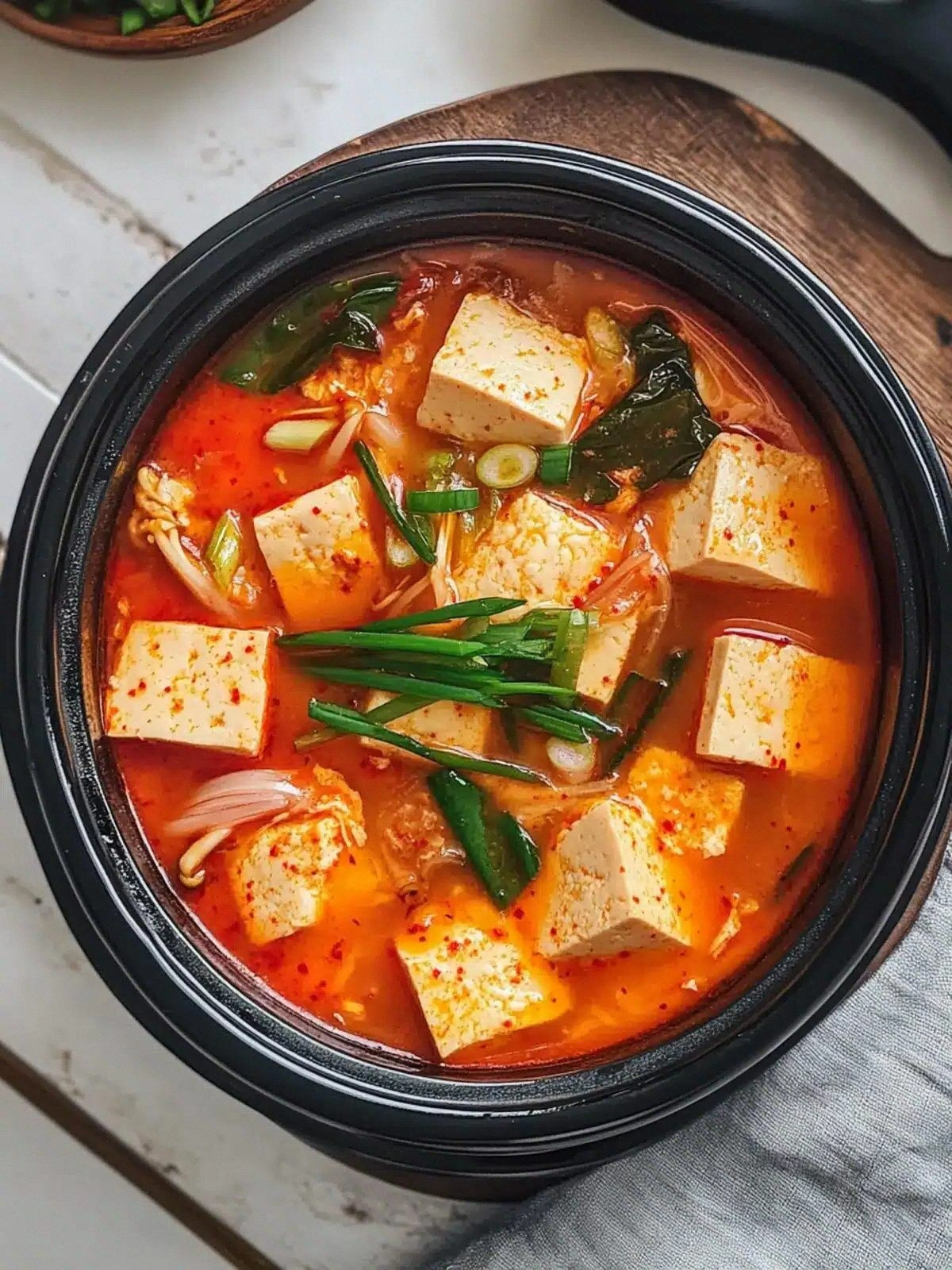
Picture this: a pot bubbling gently, the steam curling like wisps of cloud, the faint clink of a wooden spoon against the saucepan, and the unmistakable aroma of toasted sesame oil mingling with the sharpness of fresh garlic. As the broth thickens, the silken tofu gently sinks, its delicate surface glistening like a pearl. The first bite is a marriage of silky softness and a spicy, umami-packed punch that spreads across your palate like velvet. The heat rises, the room fills with the comforting scent of Korean broth, and the anticipation builds—will this stew be the one that finally satisfies your midnight cravings?
Most Korean tofu stews you find online are either too bland or too heavy, with either a missing depth of flavor or an overbearing spice level that makes you question your life choices. This version, however, is a masterclass in balance. It layers the subtle sweetness of anchovy stock with the fiery bite of gochugaru, all while preserving the tofu’s airy texture. The result is a dish that is both comforting and daring, a hug in a bowl that feels like a bold, unapologetic adventure. I dare you to taste this and not go back for seconds—if you do, it’s a sign that something is missing in your kitchen arsenal.
I’ll be honest—when I first made this stew, I ate half the batch before anyone else got a taste. The secret? A combination of ingredients that work together like a well-rehearsed orchestra. The anchovy stock gives it that savory depth, the toasted sesame oil adds a nutty warmth, and the gochugaru keeps the heat at a level that’s thrilling without being overwhelming. The silken tofu, when added at the right moment, holds its shape like a cloud that refuses to crumble. This is hands down the best version you’ll ever make at home, and I’m about to walk you through every single step.
Picture yourself pulling this out of the stove, the whole kitchen smelling incredible, steam curling around the pot like a fragrant halo. The moment you ladle it into a bowl, the broth’s aroma swallows your senses, and the first spoonful melts your taste buds into a blissful state. If you’ve ever struggled with tofu being mushy or the broth being too thin, you’re not alone—I've got the fix. Stay with me here; this is worth it. By the end of this post, you’ll not only master the ultimate Korean soft tofu stew but also understand why this version stands head and shoulders above the rest.
What Makes This Version Stand Out
- Taste: The blend of anchovy stock and Korean soy sauce creates a savory backbone that is both deep and nuanced, far beyond the typical bland broth. The subtle sweetness from a touch of sugar balances the heat, making every bite a harmonious experience.
- Texture: Silken tofu is folded in at the last minute, preserving its airy, custard-like quality. The mushrooms add a chewy contrast, while the green onions give a fresh crunch that lifts the dish.
- Simplicity: Only nine core ingredients, all pantry staples or easily sourced, mean you can whip this up in under an hour. No complicated prep, just straightforward steps that anyone can follow.
- Uniqueness: The use of toasted sesame oil and a splash of fish sauce introduces layers of umami that set this stew apart from conventional recipes that rely solely on soy sauce and water.
- Crowd Reaction: Friends and family who’ve tried other tofu stews swear this is the only one that keeps them coming back for a second plate. The broth’s depth and the tofu’s texture create an unforgettable dining experience.
- Ingredient Quality: Fresh, high‑quality tofu and properly toasted sesame oil elevate the dish. Even a small difference in the quality of the anchovy stock can drastically change the flavor profile.
- Cooking Method: The technique of searing the aromatics first and then slowly simmering the broth before adding the tofu ensures maximum flavor extraction without overcooking the delicate tofu.
- Make‑Ahead Potential: The broth can be prepared ahead of time and refrigerated; adding fresh tofu just before serving keeps the dish fresh and ready to go.
Alright, let's break down exactly what goes into this masterpiece…
Inside the Ingredient List
The Flavor Base
Anchovy stock is the heart of this stew. It’s made by simmering dried anchovies and kelp in water, extracting a savory, oceanic umami that can’t be replicated by any other broth. Skipping it results in a bland, flat soup that feels like a missed opportunity. If you’re allergic to fish or simply don’t have anchovies on hand, a kombu‑infused vegetable broth can serve as a decent substitute, though the depth will be slightly less intense.
The toasted sesame oil adds a nutty, warm aroma that lingers in the final dish. It’s the difference between a bland broth and one that feels like it’s been kissed by the sun. A small amount—just a teaspoon—goes a long way; too much can overpower the delicate tofu. When buying sesame oil, look for a dark, opaque bottle; clear bottles often contain a lower quality, more processed oil.
The Korean soup soy sauce brings a salty, slightly sweet undertone that balances the anchovy stock’s saltiness. Unlike regular soy sauce, this variety has a richer, deeper flavor profile that works well in soups and stews. If you can’t find the Korean version, a dash of tamari mixed with a touch of honey can emulate the same effect.
A splash of fish sauce adds a briny punch that cuts through the richness of the broth. Because it’s so potent, use it sparingly—just half a tablespoon. If you’re vegetarian, a small amount of soy sauce with a pinch of sea salt can replace it, though the flavor will be noticeably different.
A pinch of sugar is essential. It balances the heat from the gochugaru and the saltiness from the anchovy stock, creating a more rounded taste. If you’re avoiding sugar, a tiny splash of honey or maple syrup can fill the role, but be mindful of the liquid volume.
The Texture Crew
Silken tofu is the star of the show, and its delicate texture is what makes this stew unforgettable. It’s important to handle it gently; when adding to the broth, use a wooden spoon to fold it in instead of stirring vigorously. If you cut it into larger cubes, the tofu will hold its shape better and provide a more satisfying bite.
Mushrooms—any variety will do, but shiitake or button mushrooms add a subtle earthiness that complements the tofu’s mildness. Slice them thinly so they can absorb the broth’s flavors quickly. If you’re a fan of umami, consider adding a handful of dried shiitake mushrooms to the stock before simmering.
The green onion adds a bright, fresh note that cuts through the richness. Slice the stalks thinly, keeping both the white and green parts separate; the white provides a mild onion flavor, while the green adds a fresh, almost citrusy brightness.
Garlic, ground into a paste or minced finely, releases its full aroma during the sauté stage. It’s the foundation that grounds the broth’s flavor. If you’re sensitive to garlic, a small amount of garlic powder can substitute, but the fresh garlic’s aroma is irreplaceable.
The Unexpected Star
Gochugaru, the Korean red pepper flakes, is what brings the heat. It’s not just about spiciness; it adds a smoky, slightly sweet undertone that gives the stew depth. Use a moderate amount—two tablespoons—to keep the heat balanced. If you prefer a milder stew, reduce the gochugaru to one tablespoon; just remember to adjust the saltiness accordingly.
Yellow onion, diced finely, adds sweetness and body to the broth. It caramelizes slightly during the sauté, creating a subtle sweet base that balances the broth’s saltiness. If you’re short on onion, a small amount of carrot or celery can add sweetness, but the flavor will shift.
The Final Flourish
The protein of choice—be it shrimp, chicken, pork, or tofu—is what makes this stew versatile. For a classic Korean flavor, shrimp or pork belly are ideal. If you’re vegan, a plant-based protein like seitan or tempeh works well. The key is to cook the protein until just done before adding the tofu; overcooking will result in a rubbery texture.
When adding the protein, be sure it’s cut into bite‑sized pieces to ensure even cooking. This allows the protein to release its own juices, which meld with the broth, creating a richer, more complex flavor profile. A quick sear before simmering locks in the juices and adds a slight caramelization.
Everything's prepped? Good. Let's get into the real action…
The Method — Step by Step
- In a medium saucepan, heat the vegetable oil over medium heat. Once the oil shimmers, add the finely diced yellow onion and the minced garlic. Sauté until the onion turns translucent and the garlic releases a fragrant aroma—about 3 to 4 minutes. This step builds the aromatic foundation of the broth.
- Add the toasted sesame oil and stir quickly to avoid burning. The oil should coat the onions and garlic, giving the mixture a nutty scent. This is the moment of truth; if the oil is too hot, it will smoke and ruin the flavor. Keep the heat moderate and stir constantly.
- Pour in the anchovy stock and bring to a gentle boil. Reduce the heat to low and let it simmer for 10 minutes, allowing the flavors to meld. The broth should develop a deep amber hue, indicating that the umami has fully extracted. This slow simmer is essential for depth.
- Stir in the Korean soup soy sauce, fish sauce, sugar, and gochugaru. Taste the broth; it should have a balanced, slightly sweet, and spicy profile. If the heat feels too intense, add a splash of water to dilute slightly. The broth should not be too thin, but it should still be pourable.
- Add the sliced mushrooms and let them cook for 3 minutes until they soften. The mushrooms absorb the broth’s flavors, adding a savory depth that complements the tofu. Keep the heat low to prevent the mushrooms from releasing too much water.
- Gently fold in the protein of choice. If using shrimp, sear them until pink; if using pork, sear until browned. Let them simmer in the broth for 4 to 5 minutes until cooked through. The protein should release its juices, enriching the broth further.
- Finally, add the silken tofu cubes. Gently fold them into the broth, letting them heat through for 2 minutes. The tofu should absorb the broth’s flavor but remain tender and almost translucent. This final step is crucial for achieving the signature silky texture.
- Add the green onion slices and let them wilt for 30 seconds. The green onions add a bright, fresh finish that cuts through the richness. Serve immediately in a bowl, and drizzle a few drops of sesame oil if desired. The aroma will instantly transport you to a cozy Korean kitchen.
- Enjoy! Pair with steamed rice, kimchi, or a simple side of pickled radish for a complete meal. If you’re a fan of a little extra crunch, sprinkle some toasted sesame seeds on top. The result is a comforting, spicy, and utterly satisfying bowl.
That’s it—you did it. But hold on, I’ve got a few more tricks that will take this to another level. Keep reading to learn how to elevate the flavor profile and texture even further.
Insider Tricks for Flawless Results
The Temperature Rule Nobody Follows
Maintaining a low simmer throughout the cooking process is vital. If the broth boils too vigorously, the tofu will break apart and the broth will become cloudy. Use a medium‑low heat and cover the pot partially to keep a gentle bubble. This ensures the broth stays clear and the tofu stays intact.
Why Your Nose Knows Best
Smell the broth before adding the tofu. If it smells bright, nutty, and slightly sweet, it’s ready. A dull or overly fishy scent indicates the stock needs more time to develop. Trust your nose; it’s the best judge of flavor maturity.
The 5-Minute Rest That Changes Everything
After removing the pot from heat, let the stew rest for five minutes before serving. This allows the flavors to marry fully and the tofu to settle. The rest period also reduces the sharpness of the gochugaru, giving a smoother finish.
Keep the Tofu Fresh
If you’re preparing the broth ahead of time, store it in an airtight container and refrigerate. When you’re ready to serve, reheat gently and add fresh tofu. This keeps the tofu from absorbing too much liquid and becoming soggy.
Adding a Splash of Rice Wine
A splash of Korean rice wine (makgeolli) added to the broth during simmering introduces a subtle sweetness that balances the heat. It also adds a depth that mimics the flavor of traditional Korean stews. Use just a tablespoon to avoid overpowering the dish.
Creative Twists and Variations
This recipe is a playground. Here are some of my favorite ways to switch things up:
Seafood Sensation
Swap the protein for a mix of shrimp, clams, and scallops. The briny seafood adds a luxurious depth that pairs wonderfully with the spicy broth. Serve over steamed rice for a complete seafood feast.
Meat Lover’s Dream
Use thinly sliced pork belly or beef short rib for a meaty, umami‑rich version. The fat renders into the broth, creating a silky texture that complements the tofu. Add a dash of Korean chili paste for an extra kick.
Vegetarian Delight
Replace the protein with tofu cubes or seitan. Add extra mushrooms, such as shiitake or enoki, for a more complex flavor. Finish with a drizzle of soy sauce and a sprinkle of sesame seeds.
Kimchi Twist
Stir in a handful of kimchi during the final simmer. The fermented cabbage adds a tangy, spicy layer that elevates the broth’s complexity. It also introduces probiotics for a gut‑friendly meal.
Spicy Szechuan Variation
Add a tablespoon of Szechuan peppercorns to the broth for a numbing heat. This twist transforms the stew into an Asian fusion dish. Pair it with a side of stir‑fried bok choy for a balanced meal.
Herb Garden Version
Finish the stew with fresh herbs like cilantro, parsley, or Korean perilla leaves. The herbs add a bright, fresh finish that cuts through the richness. Serve with a side of pickled cucumbers for a refreshing contrast.
Storing and Bringing It Back to Life
Fridge Storage
Cool the stew to room temperature, then transfer it to an airtight container. Store in the refrigerator for up to 3 days. The broth will thicken slightly as it chills; add a splash of water before reheating to restore its original consistency.
Freezer Friendly
For longer storage, portion the stew into freezer‑safe containers or zip‑lock bags. Freeze for up to 2 weeks. When ready to eat, thaw overnight in the refrigerator and gently reheat on the stove, adding fresh tofu just before serving.
Best Reheating Method
Reheat the stew on low heat, stirring occasionally. Add a splash of water or broth to loosen it if it has thickened. Do not boil, as high heat can break the tofu. Finish with fresh tofu and green onions to bring the dish back to its original glory.