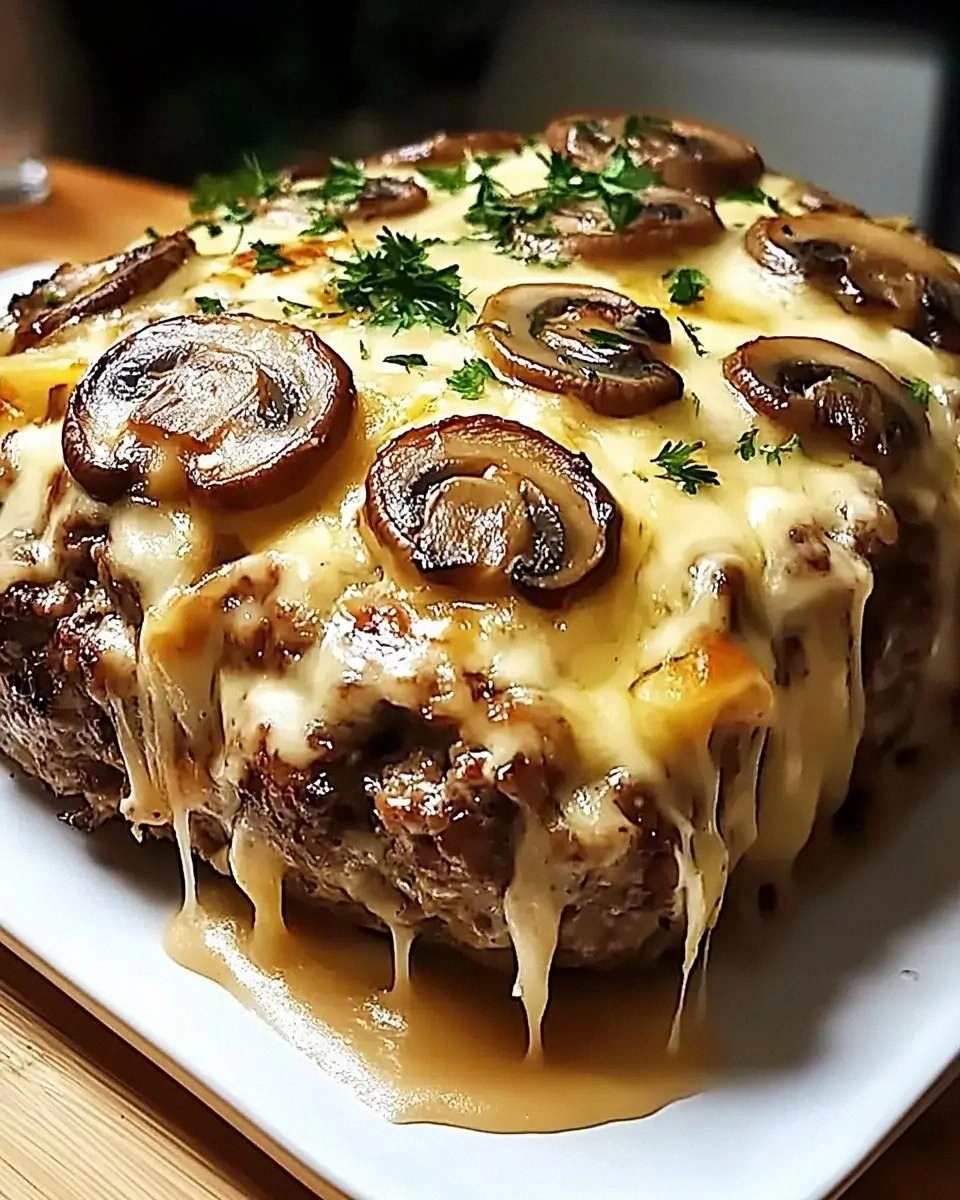
I’ll be honest — I ate half the batch before anyone else got to try it, and that was the moment I realized I had stumbled onto something truly legendary. It started on a rainy Tuesday when my roommate dared me to reinvent the classic meatloaf, a dish that usually ends up as a soggy, forgettable slab on the plate. I was armed with a battered skillet, a half‑full pantry, and a stubborn craving for comfort food that could actually make you feel like a culinary superhero. The kitchen smelled like a forest after rain: earthy mushrooms, nutty Parmesan, and the faint, sweet promise of caramelizing onions. I could hear the sizzle of butter hitting the pan, and my heart was already doing a little happy dance.
Most meatloaf recipes treat the meat as a bland canvas, but this version paints it with bold, buttery strokes of Swiss cheese and a mushroom‑onion mire that’s as rich as a velvet curtain. Imagine a loaf that’s tender on the inside, with a caramelized crust that crackles like thin ice when you slice through it. The Swiss cheese melts into the meat, creating pockets of gooey, nutty goodness that make each bite feel like a secret indulgence. I dare you to taste this and not go back for seconds, because the flavor profile is so layered that it will haunt your palate in the best possible way.
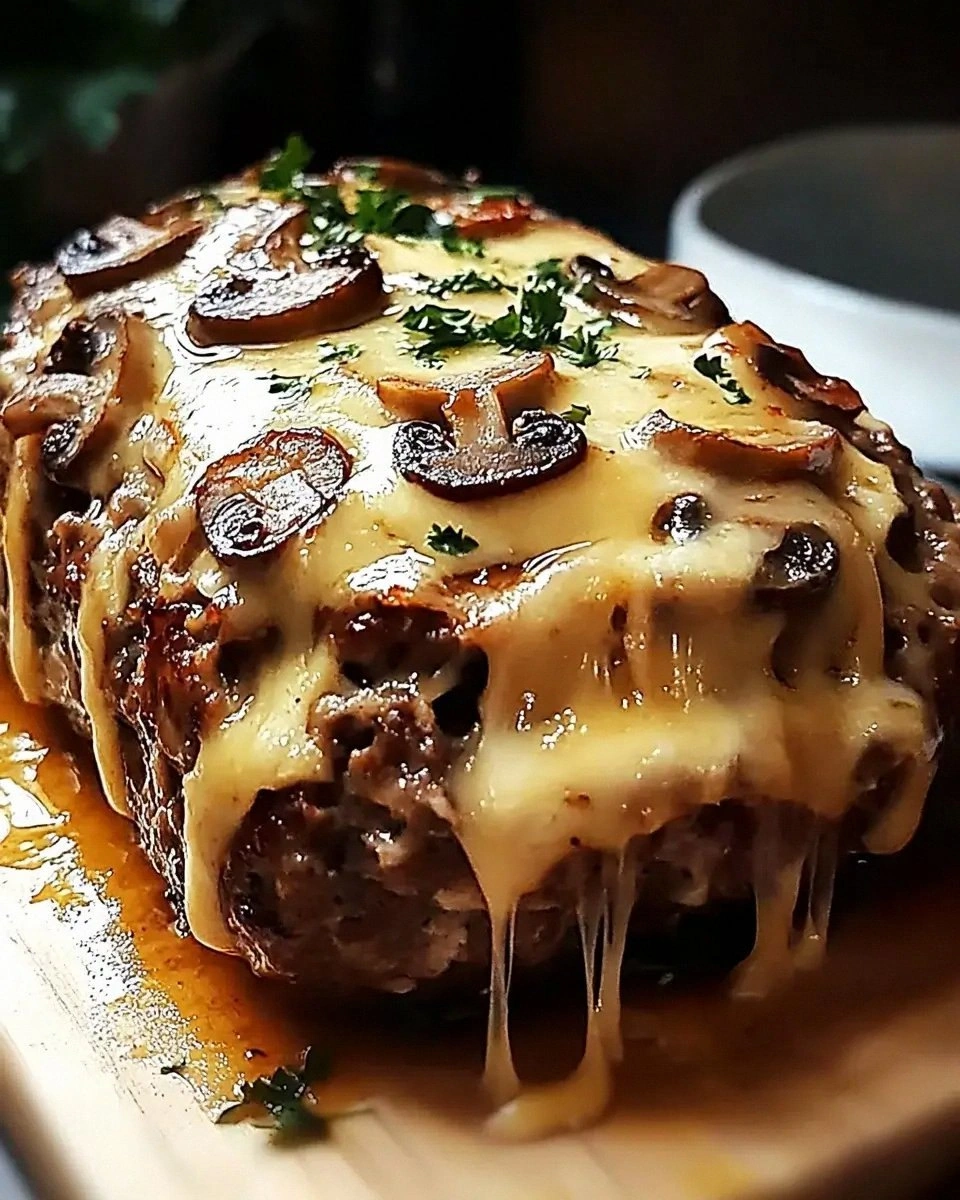
What truly separates this meatloaf from the rest is a simple technique that most home cooks overlook: a quick sauté of the mushrooms and onions in butter before they even meet the meat. This step unlocks a depth of umami that you’ll swear is impossible to achieve without a professional kitchen. And if you think adding Swiss cheese is a gimmick, think again — the cheese’s subtle sweetness balances the savory meat, while its melt‑in‑your‑mouth texture makes the loaf feel luxurious, not heavy. Picture yourself pulling this out of the oven, the whole kitchen smelling incredible, and the crust gleaming with a golden‑brown sheen that practically begs to be photographed.
Okay, ready for the game‑changer? I’m about to walk you through every single step — by the end, you’ll wonder how you ever made meatloaf any other way. Stay with me here — this is worth it. We’ll cover the why behind each ingredient, the exact temperature that guarantees a perfect crust, and a handful of insider tricks that will make your loaf the star of any dinner table. Let’s get started, shall we?
What Makes This Version Stand Out
- Flavor Explosion: The combination of sautéed mushrooms, caramelized onions, and Swiss cheese creates a symphony of umami, sweet, and nutty notes that dance on the tongue.
- Texture Mastery: A crisp, caramelized exterior gives way to a moist, tender interior, thanks to the perfect meat‑to‑breadcrumb ratio and the milk soak.
- Simplicity Meets Sophistication: Only seven core ingredients, yet each one is treated with a technique that elevates the whole dish.
- Unique Ingredient Twist: Swiss cheese isn’t just a topping; it’s folded into the mixture, ensuring every bite is buttery and cheesy.
- Crowd‑Pleaser Factor: Even picky eaters who claim they “don’t like meatloaf” end up asking for seconds.
- Ingredient Quality: Using a blend of beef and pork adds richness, while fresh mushrooms keep the flavor bright.
- Cooking Method: Baking at a high initial heat locks in juices, then lowering the temperature finishes the loaf evenly.
- Make‑Ahead Potential: The loaf freezes beautifully, and reheats with a splash of water to bring back that fresh‑out‑of‑the‑oven feel.
Inside the Ingredient List
The Flavor Base
The first hero in our lineup is the ½ cup finely chopped onions. Onions bring a natural sweetness that balances the savory meat, and when you caramelize them just right, they develop a deep, almost caramel‑like flavor that can’t be replicated with any other vegetable. If you skip this step, you’ll miss out on that subtle sweetness that makes the loaf feel like a celebration rather than a weekday dinner. A good swap is shallots, which add a milder, more delicate flavor, but you’ll lose a bit of the classic onion punch.
Next up, the 1 cup finely chopped mushrooms. Mushrooms are the umami powerhouses of this dish; they absorb the butter, release their earthy juices, and then mingle with the meat to create a depth you’d usually need a dash of Worcestershire for. If you’re allergic to mushrooms, try finely diced carrots or even a handful of finely chopped spinach for a different, but still tasty, vegetal note.
The Texture Crew
1 cup breadcrumbs act as the structural backbone, soaking up the milk and keeping the loaf from crumbling apart. Using fresh, dry breadcrumbs yields a lighter texture, while stale breadcrumbs can make the loaf dense. If you’re gluten‑free, swap in almond flour or gluten‑free oat crumbs, but adjust the milk amount slightly to keep the moisture balanced.
½ cup milk hydrates the breadcrumbs, creating a custard‑like interior that keeps the meat tender. Whole milk is ideal for richness, but 2% works just as well. For a dairy‑free version, use unsweetened almond milk or oat milk; the flavor will shift subtly but remain delicious.
The Unexpected Star
½ cup grated Parmesan cheese adds a salty, nutty edge that lifts the whole loaf. Parmesan also contributes a slight crust when the loaf bakes, giving you that coveted golden‑brown finish. If you don’t have Parmesan, Pecorino Romano is a great alternative, though it’s a touch sharper.
The Final Flourish
1 lb ground beef and ½ lb ground pork together create the perfect fat‑to‑lean ratio. Beef brings a robust flavor, while pork adds moisture and a subtle sweetness. When selecting meat, look for a beef that’s about 80% lean and pork that’s around 85% lean; this balance prevents the loaf from drying out. If you’re aiming for a leaner version, you can replace half the pork with extra‑lean ground turkey, but expect a slightly different texture.
Everything's prepped? Good. Let's get into the real action...
The Method — Step by Step
Preheat your oven to 425°F (220°C). This high heat blast at the start will create that coveted crust that pulls away from the sides of the pan, giving you a beautiful, caramelized edge. While the oven warms, line a rimmed baking sheet with parchment and set a wire rack on top; the rack lets air circulate, ensuring an even bake.
Kitchen Hack: Place the baking sheet in the oven while it preheats; a hot sheet jump‑starts the crust formation.In a large skillet, melt 2 tablespoons of butter over medium‑high heat. Add the chopped onions and a pinch of salt, letting them sweat for about 3 minutes before they start to turn translucent. Then toss in the mushrooms, stirring occasionally, until they release their moisture and begin to brown — you’ll hear that satisfying sizzle that signals flavor is being built.
Once the mushroom‑onion mixture is golden and fragrant, transfer it to a large mixing bowl and let it cool completely. This cooling step is crucial; if the mixture is still warm, it will start cooking the meat prematurely, leading to a crumbly loaf.
In a separate small bowl, combine the breadcrumbs with the milk. Stir gently and let sit for 5 minutes; the breadcrumbs will soak up the milk, swelling into soft, custard‑like pillows that keep the meat moist.
Now, add the ground beef, ground pork, soaked breadcrumbs, grated Parmesan, and the cooled mushroom‑onion mixture into the large bowl. Sprinkle in ½ cup of shredded Swiss cheese (reserve a handful for the top later). Using your hands, gently mix everything together. Do not over‑mix — you want to keep the meat tender, not turn it into a dense brick.
Watch Out: Over‑mixing releases too much protein, resulting in a tough loaf.Shape the mixture into a loaf about 9 inches long and 4 inches wide, then place it on the prepared wire rack. Pat the top gently with a spatula to smooth it out. Sprinkle the reserved Swiss cheese over the top, pressing lightly so it adheres during baking.
Slide the baking sheet into the preheated oven and bake for 15 minutes at 425°F. You’ll notice the edges start to pull away from the pan and the cheese begins to melt and brown — that’s the moment of truth. After 15 minutes, reduce the temperature to 350°F (175°C) and continue baking for another 20‑25 minutes, or until a meat thermometer inserted into the center reads 160°F (71°C).
Kitchen Hack: If you like a glossy finish, brush the top with a whisked egg white during the last 5 minutes of bake.When the loaf is done, remove it from the oven and let it rest on a cutting board for at least 10 minutes. Resting allows the juices to redistribute, ensuring each slice stays moist and the cheese stays gooey. While it rests, the aroma will fill the kitchen, making everyone wonder what you’ve been cooking all day.
Finally, slice the loaf into thick wedges, serve with a simple green salad or roasted veggies, and watch your guests devour it like it’s the best thing since sliced bread. I dare you to try one bite and not ask for seconds — trust me, you’ll be back for more.
That's it — you did it. But hold on, I've got a few more tricks that'll take this to another level...
Insider Tricks for Flawless Results
The Temperature Rule Nobody Follows
Start the loaf at a scorching 425°F for the first 15 minutes, then drop the heat. This two‑stage approach creates a crust that’s crisp without over‑cooking the interior. I once tried baking at a steady 375°F, and the loaf turned out soggy in the middle — a clear lesson that the initial blast is non‑negotiable.
Why Your Nose Knows Best
When the cheese starts to turn a deep amber, that’s your cue that the loaf is nearly done. Trusting your senses beats relying on a timer every time. If you smell a faint nutty aroma, that’s the Parmesan caramelizing — a sign you’re on the right track.
The 5‑Minute Rest That Changes Everything
Resting the loaf after baking isn’t just a suggestion; it’s a game‑changer. During those 5‑10 minutes, the internal temperature evens out, and the juices settle. Skipping this step leads to a dry slice, and nobody wants that.
Mix‑Gentle, Not‑Vigorous
When you combine the meat with the other ingredients, use a gentle folding motion. Over‑mixing activates too much gluten, turning your loaf into a dense brick. I once mixed with a fork for too long and ended up with a loaf that could’ve been used as a doorstop.
The Secret of the Butter‑Sauté
Using butter instead of oil for the mushroom‑onion sauté adds a layer of richness that oil can’t match. The milk solids in butter caramelize, imparting a nutty background flavor that makes the entire loaf taste like it’s been slow‑cooked for hours.
Creative Twists and Variations
This recipe is a playground. Here are some of my favorite ways to switch things up:
Smoky Bacon‑Wrapped Loaf
Wrap the entire loaf in half a pound of thin‑sliced bacon before baking. The bacon renders its fat, infusing the meat with a smoky depth and creating a crispy, caramelized exterior that’s impossible to resist.
Herb‑Infused Mediterranean
Add a tablespoon of chopped fresh oregano, a teaspoon of dried thyme, and a handful of kalamata olives to the mixture. The herbs bring a bright, aromatic lift while the olives add salty bursts that complement the Swiss cheese beautifully.
Spicy Chipotle Kick
Stir in one finely chopped chipotle pepper in adobo sauce and a teaspoon of smoked paprika. This gives the loaf a smoky heat that pairs perfectly with the mellow Swiss, ideal for those who love a little fire.
Cheese‑Lover’s Dream
Swap the Swiss cheese for a blend of Gruyère and sharp cheddar, and fold in an extra half‑cup of shredded cheese into the center before shaping. The result is a molten cheese core that oozes out with each slice.
Vegetarian “Meatloaf”
Replace the meat with a mix of lentils, walnuts, and finely grated carrots. Keep the breadcrumbs, milk, and cheese, and you’ll have a hearty, plant‑based loaf that still delivers that comforting texture.
Storing and Bringing It Back to Life
Fridge Storage
Allow the loaf to cool completely, then wrap it tightly in plastic wrap and store in an airtight container. It will stay fresh for up to 4 days. When reheating, slice the loaf, place the pieces on a microwave‑safe plate, and cover with a damp paper towel to keep moisture in.
Freezer Friendly
Wrap the cooled loaf in a double layer of foil, then place it in a zip‑top freezer bag. It freezes beautifully for up to 3 months. To reheat, thaw overnight in the fridge, then bake at 350°F for 15‑20 minutes, adding a splash of water to the pan to steam the loaf back to life.
Best Reheating Method
For the crispiest leftovers, preheat your oven to 375°F, place slices on a baking sheet, and drizzle a teaspoon of broth or water over each slice. Cover loosely with foil for the first 8 minutes, then remove the foil to let the top crisp up for another 5 minutes. The result is a slice that tastes almost as fresh as the original.