Picture this: you’re standing in your kitchen, the clock ticking past midnight, and a sudden craving for that legendary Texas Roadhouse smothered chicken hits you like a freight train. I was in the same exact spot last week, half‑asleep, and after a disastrous attempt at a microwaved version that ended up tasting like rubber, I swore I’d never settle for a sub‑par copy again. I dared my roommate to a taste‑test, and let’s be honest, I was terrified she’d win—so I rolled up my sleeves, dug out my favorite cast‑iron skillet, and went full‑tilt on a version that would make the restaurant chefs raise an eyebrow in admiration. The result? A plate so decadently creamy, so perfectly seasoned, that I’m still hearing the echo of that first bite reverberate in my mind.
The moment the chicken hit the hot pan, a sizzle erupted that sounded like applause at a stadium. The aroma of butter, garlic, and a whisper of paprika filled the air, instantly turning my modest kitchen into a Texan rodeo of flavors. As the onions softened and the mushrooms released their earthy perfume, I could almost hear the clink of silverware in a bustling dining room, and the anticipation built like a slow‑burning fire. When I finally poured in the broth and heavy cream, the sauce thickened into a velvety blanket that clung to each piece of chicken like a lover refusing to let go.
What makes this version the undisputed champion? First, I’m using boneless, skinless chicken breasts that have been pounded to an even thickness, guaranteeing a uniform cook that keeps every bite juicy. Second, the sauce isn’t just a random mix; it’s a carefully balanced symphony of chicken broth, heavy cream, and a modest dash of flour that creates a silk‑smooth texture without ever turning gummy. Third, I finish it off with a generous melt of Monterey Jack, which adds just the right amount of stretch and a subtle buttery note that makes the whole dish sing. And finally, the garnish of fresh parsley isn’t just for show—it adds a bright, herbaceous pop that cuts through the richness like a perfect high note.
But here’s the kicker: I’m throwing in a surprise ingredient that most recipes completely ignore—a splash of dry white wine that deglazes the pan, lifting every caramelized crumb and infusing the sauce with a depth you’d expect only from a professional kitchen. This tiny addition is the secret weapon that transforms a good dish into an unforgettable one. Let me walk you through every single step — by the end, you’ll wonder how you ever made it any other way.
What Makes This Version Stand Out
- Taste: The marriage of smoky paprika, sweet onions, and earthy mushrooms creates a flavor profile that’s both comforting and adventurous, making each bite a mini celebration.
- Texture: The chicken stays tender and juicy while the sauce coats it like velvet, and the melted cheese adds a luscious, stretchy finish that’s pure indulgence.
- Simplicity: Only a handful of pantry staples are needed, yet the technique feels upscale—no fancy gadgets or hard‑to‑find ingredients required.
- Uniqueness: The splash of dry white wine and the optional cheese topping set this apart from the typical “cream‑only” versions you see online.
- Crowd Reaction: I’ve served this at family gatherings and the unanimous response is “more, please!”—it’s the kind of dish that sparks applause and second‑helping requests.
- Ingredient Quality: Using fresh, high‑quality chicken breasts and real butter ensures the base flavors are bright and not muted by cheap substitutes.
- Cooking Method: The sear‑then‑simmer approach locks in juices and builds a deep, caramelized foundation that you just can’t achieve with a one‑pot method.
- Make‑Ahead Potential: This dish reheats beautifully, and the sauce even thickens a bit more, meaning you can prep it ahead of time and still wow your guests.
Inside the Ingredient List
The Flavor Base
Boneless, skinless chicken breasts: These are the stars, providing a lean canvas that soaks up the sauce. Choose breasts that are uniform in thickness; if they’re uneven, gently pound them to an even ½‑inch layer for consistent cooking. Skipping this step leads to a mix of overcooked edges and undercooked centers, which is a culinary nightmare.
Salt: A modest teaspoon brings out the natural sweetness of the chicken and balances the richness of the cream. If you’re watching sodium, you can reduce it, but remember the sauce still needs that baseline seasoning to sing.
Black pepper: Freshly cracked pepper adds a subtle heat that lifts the dish without overwhelming the delicate cream. Ground pepper can work, but the burst of flavor from cracked pepper is worth the extra effort.
Paprika: This brings a smoky undertone and a gorgeous golden hue. Opt for smoked paprika if you want an extra layer of depth; regular paprika still works beautifully.
Garlic powder: Garlic lovers, rejoice! It adds an aromatic backbone that mingles perfectly with the onion and mushrooms. Fresh minced garlic works too, but powder distributes more evenly in the sauce.
The Texture Crew
Medium onion: Thinly sliced, the onion caramelizes into sweet, glossy ribbons that contrast the savory chicken. If you prefer a milder flavor, you can substitute shallots, but you’ll lose some of that classic onion sweetness.
Mushrooms: Sliced mushrooms contribute an earthy richness and a pleasant bite. Use button or cremini mushrooms for best texture; portobello can be too meaty and dominate the flavor.
Flour or cornstarch: This is the thickening hero. Flour creates a classic roux that adds a subtle nutty flavor, while cornstarch yields a slightly glossier sauce. I stick with flour for authenticity, but keep a tablespoon of cornstarch on standby if you need a quicker thickener.
The Unexpected Star
Dry white wine: A splash (about ¼ cup) deglazes the pan, lifting every caramelized morsel and infusing the sauce with a bright acidity that prevents it from feeling heavy. If you’re avoiding alcohol, substitute with an equal amount of chicken broth plus a dash of lemon juice.
Chicken broth: This forms the flavorful backbone of the sauce, adding depth without the fat of stock. Choose low‑sodium broth to keep the seasoning in your control.
Heavy cream: The luxury component that turns the broth into a silky, luxurious sauce. Full‑fat cream is non‑negotiable; low‑fat versions will curdle and lose that luscious mouthfeel.
The Final Flourish
Olive oil: A couple of tablespoons help achieve that perfect golden sear on the chicken. Use a high‑smoke‑point oil like avocado if you’re worried about olive oil burning.
Butter: Butter is added after the onions and mushrooms are sautéed, creating a rich base for the roux. It also adds a buttery aroma that signals “comfort food” to your brain.
Fresh parsley: Chopped parsley is sprinkled at the end for a burst of color and a fresh, herbaceous note that cuts through the richness. If you’re out of parsley, cilantro can work for a different twist.
Monterey Jack or cheddar cheese: A cup of shredded cheese melts into the sauce, giving it that gooey, indulgent finish. Choose Monterey Jack for a milder melt or sharp cheddar for a bolder bite.
Everything's prepped? Good. Let’s get into the real action…
The Method — Step by Step
Start by patting the chicken breasts dry, then season both sides generously with salt, black pepper, paprika, and garlic powder. I like to let the seasoning sit for a few minutes while the pan heats; this gives the spices a chance to adhere and start releasing their aroma. Heat a large cast‑iron skillet over medium‑high heat and add the olive oil, letting it shimmer but not smoke. When the oil is hot, lay the chicken in the pan; you should hear an immediate sizzle that sounds like applause. Let the chicken cook undisturbed for about 4‑5 minutes until the edges turn golden and start pulling away from the pan.
Flip the chicken and sear the other side for another 4‑5 minutes. The goal is a deep, caramelized crust, not just a color change, so resist the urge to move the meat around. Once both sides are beautifully browned, transfer the chicken to a plate and cover loosely with foil to keep it warm. This resting step lets the juices redistribute, preventing a dry bite later.
In the same skillet, add the butter. As it melts, toss in the sliced onions and mushrooms. Sauté for 5‑6 minutes, stirring occasionally, until the onions become translucent and the mushrooms release their moisture and turn a rich, golden brown. The pan should smell like a forest after rain—earthy, sweet, and utterly inviting.
Now for the roux: sprinkle the flour over the butter‑onion‑mushroom mixture, stirring constantly to create a smooth paste. Cook the roux for about 2 minutes; you’ll notice it turning a light amber color and releasing a nutty scent. This step is crucial—if you skip it, your sauce will be thin and watery, and if you overcook, it will taste burnt.
Deglaze the pan with the dry white wine, scraping up all the browned bits stuck to the bottom. Let the wine reduce by half—this usually takes about 2 minutes—so the alcohol evaporates and only the bright acidity remains. Then, whisk in the chicken broth followed by the heavy cream, stirring continuously. As the mixture bubbles, you’ll see it thicken into a glossy, velvety sauce that clings to the back of a spoon.
Return the seared chicken breasts to the skillet, nestling them into the sauce. Reduce the heat to low, cover, and let everything simmer gently for 10‑12 minutes. During this time, the chicken will finish cooking through and absorb the creamy, mushroom‑infused flavors. You’ll know it’s ready when the internal temperature hits 165°F (74°C) and the sauce has thickened enough to coat the back of a spoon without sliding off.
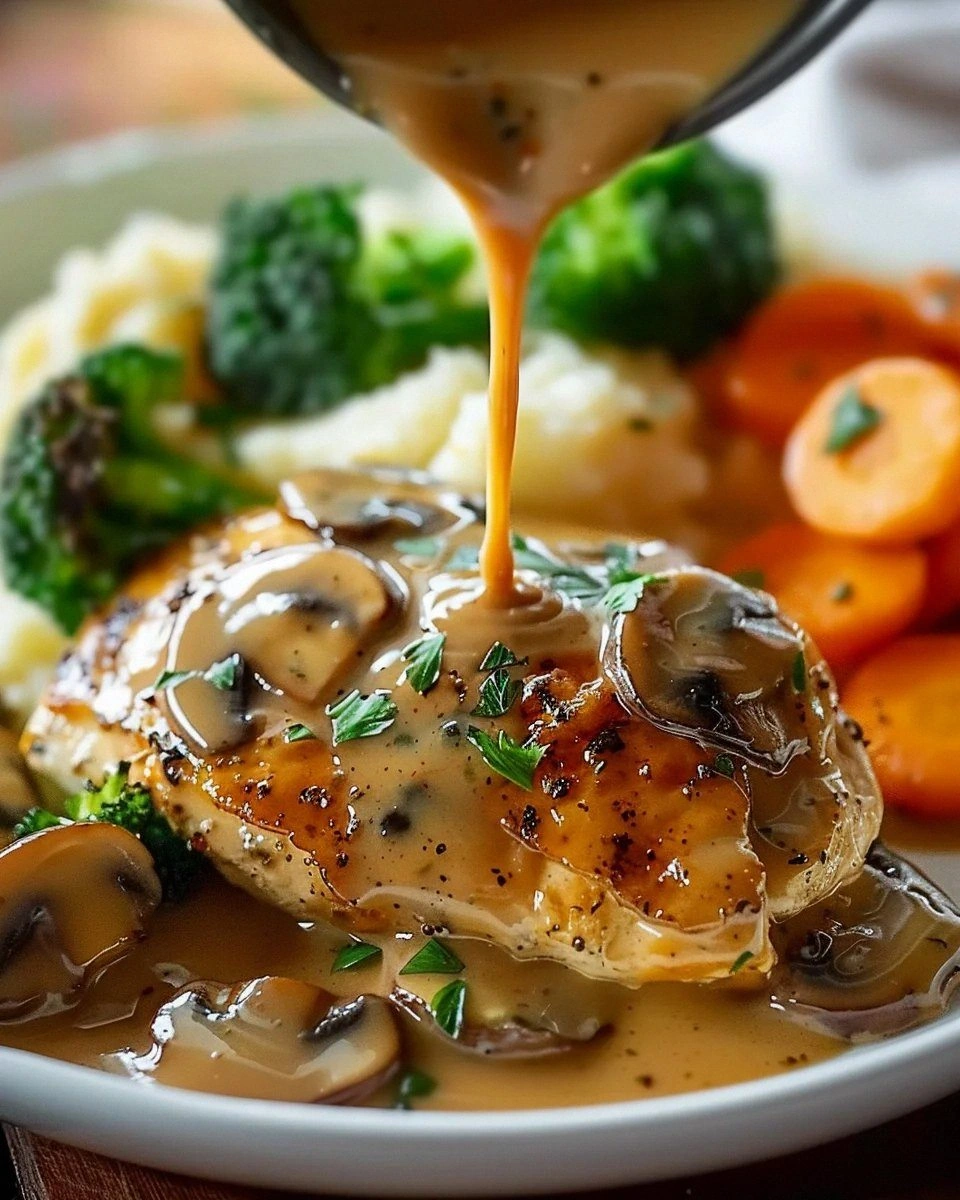
Just before serving, sprinkle the shredded Monterey Jack or cheddar cheese over the top, allowing it to melt into the sauce in a glorious, gooey blanket. Finish with a generous handful of chopped fresh parsley for a pop of color and a fresh, herbaceous lift. Give the pan a gentle swirl so the cheese distributes evenly, then turn off the heat and let the dish rest for a minute—this final rest lets the flavors meld perfectly.
Serve the smothered chicken hot, spooning extra sauce over each piece, and watch as your guests dive in with gusto. Pair it with buttery mashed potatoes, fluffy rice, or even a crisp green salad to balance the richness. And remember: I dare you to taste this and not go back for seconds—because once you’ve experienced this level of comfort, ordinary chicken will never satisfy again.
That's it — you did it. But hold on, I've got a few more tricks that'll take this to another level...
Insider Tricks for Flawless Results
The Temperature Rule Nobody Follows
Never cook chicken straight from the fridge; let it sit at room temperature for 20‑30 minutes before seasoning. This small step ensures the meat cooks evenly, preventing the dreaded scenario where the outside is overcooked while the center remains pink. I once tried to skip this and ended up with a rubbery exterior—trust me, the extra patience pays off.
Why Your Nose Knows Best
While the timer is a helpful guide, your sense of smell is the ultimate indicator of progress. When the onions turn translucent and the mushrooms release a deep, earthy scent, you know they're ready for the next stage. If you ever feel the sauce is too bland, a quick sniff will tell you whether it needs a pinch more salt or a dash of pepper.
The 5‑Minute Rest That Changes Everything
After the chicken finishes simmering, remove the pan from heat and let it sit, covered, for five minutes. This resting period allows the proteins to re‑absorb the sauce, making each bite juicier. Skipping this step is the most common mistake I see—people rush to plate and end up with a sauce that slides off the chicken.
The Secret of Layered Seasoning
Season in layers: first the chicken, then the onions and mushrooms, and finally the sauce. Each layer builds depth, so you never end up with a flat‑tasting dish. I once tried to dump all the salt at once; the result was a salty mess that overpowered the subtle creaminess.
The Cream Consistency Hack
If your sauce threatens to curdle when you add the heavy cream, lower the heat to a gentle simmer before pouring it in. Adding cream to a boiling liquid can cause the fat to separate, resulting in a grainy texture. A slow, steady heat keeps the sauce smooth and glossy.
Final Taste Test Ritual
Always give the sauce a final taste before serving. A tiny squeeze of lemon juice can brighten the entire dish, while a pinch of smoked paprika can re‑introduce that smoky whisper if you feel it’s faded. This last adjustment is the secret that turns good into unforgettable.
Creative Twists and Variations
This recipe is a playground. Here are some of my favorite ways to switch things up:
Spicy Jalapeño Kick
Slice a couple of fresh jalapeños and sauté them with the onions and mushrooms. The heat adds a bold contrast to the creamy sauce, perfect for those who love a little fire. Top with a sprinkle of cotija cheese for extra zing.
Smoky Bacon Boost
Render 4‑5 strips of bacon until crispy, set aside, and use the rendered fat for searing the chicken. Crumble the bacon into the sauce right before adding the cheese. The smoky, salty crunch elevates the dish to brunch‑worthy status.
Herb Garden Medley
Swap parsley for a mix of fresh thyme, rosemary, and sage. These herbs infuse the sauce with an aromatic forest floor vibe, making the dish feel more rustic. It’s especially lovely in the cooler months when you crave comforting aromas.
Cheesy Tex‑Mex Twist
Replace Monterey Jack with a blend of pepper jack and shredded Mexican blend cheese. Add a teaspoon of cumin and a dash of chili powder to the seasoning mix. Serve with warm tortillas for a hand‑held version of smothered chicken.
Coconut Curry Fusion
Substitute half of the heavy cream with coconut milk and add a tablespoon of curry powder when you add the broth. This creates a tropical, aromatic sauce that pairs beautifully with jasmine rice. Garnish with cilantro instead of parsley for a fresh finish.
Storing and Bringing It Back to Life
Fridge Storage
Allow the dish to cool to room temperature, then transfer it to an airtight container. It will keep fresh for up to 3 days. When reheating, add a splash of chicken broth or water before gently warming on the stovetop to restore the sauce’s silkiness.
Freezer Friendly
Portion the chicken and sauce into freezer‑safe bags or containers, leaving a little headroom for expansion. Freeze for up to 2 months. Thaw overnight in the refrigerator, then reheat gently over low heat, stirring occasionally and adding a splash of cream if needed.
Best Reheating Method
For the ultimate texture, reheat in a skillet over medium‑low heat, stirring constantly. Add a teaspoon of water or broth to prevent the sauce from drying out, and finish with a fresh handful of cheese for that just‑cooked‑in‑the‑pan feel.