Picture this: I’m standing in a cramped apartment kitchen, the air thick with the scent of roasted garlic and paprika, and my phone buzzes with a text from a friend daring me to make the ultimate Lebanese tomato salad. I’ve tried every version I’ve seen online—some bland, some too oily, a few that ended up looking like a science experiment gone wrong. That night, after a failed attempt with a soggy, over‑seasoned salad, I decided it was time for a culinary revolution. I pulled out my favorite campari tomatoes, a vibrant red bell pepper, and a handful of fresh herbs that made my taste buds dance. The kitchen was a whirlwind of sizzling sounds, bright colors, and the unmistakable aroma of fresh tomatoes that almost made me forget the chaos of the day.
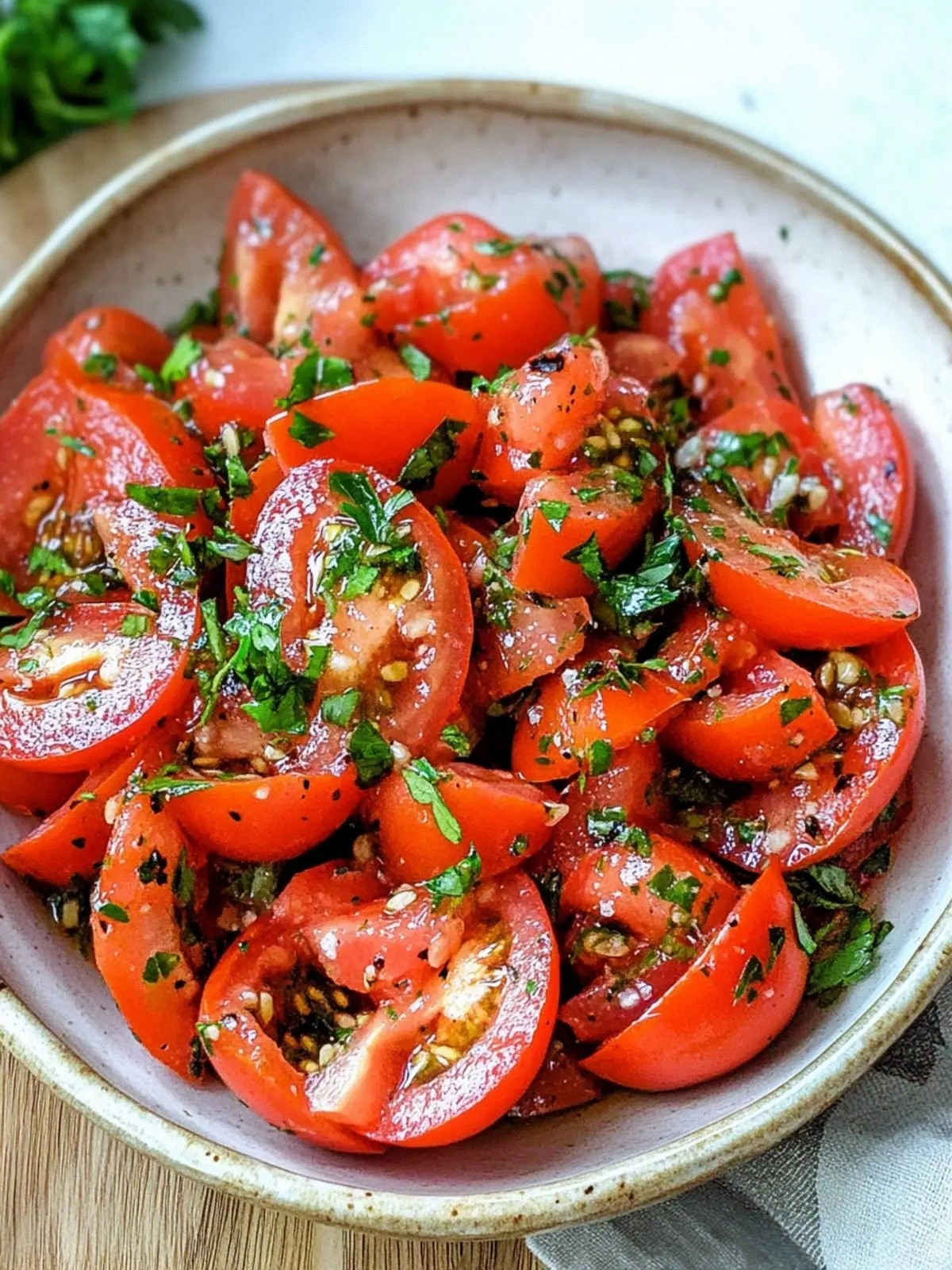
The moment I sliced the tomatoes, I could taste the sun in each bite—juicy, sweet, and slightly tangy, with a hint of pepper that lingers on the tongue. The red bell pepper added a crisp crunch that contrasts beautifully with the soft, bursting tomatoes, while the garlic brings a sharp, aromatic punch that wakes up the palate. I could hear the gentle pop of the garlic in the pan, the hiss of the olive oil as it heats, and the subtle crackle when the tomatoes start to caramelize. The texture is a delightful medley: the tomatoes are tender yet firm, the bell pepper is crisp, and the parsley adds a fresh, peppery finish. This isn’t just a salad; it’s a symphony of flavors and textures that dance in your mouth.
What makes this version stand out is that it’s not just a salad; it’s a statement. I dare you to taste this and not go back for seconds because once you try it, you’ll never settle for the ordinary. The smoky paprika gives it a depth that feels like a warm hug, while the sumac adds a citrusy brightness that cuts through the richness. The fresh, high‑quality ingredients are the secret sauce—no fancy gadgets, no over‑complicated steps, just pure, honest flavors. And if you’re looking for a dish that’s both crowd‑pleasing and easy to prep, this is hands down the best version you’ll ever make at home. Picture yourself pulling this out of the oven, the whole kitchen smelling incredible, and everyone begging for the recipe.
If you’ve ever struggled to get the right balance of acidity and sweetness in a tomato salad, you’re not alone—and I’ve got the fix. I’ll be honest—I ate half the batch before anyone else got to try it, because the flavor was that addictive. The next time you’re in the kitchen, I promise this will be the recipe that turns heads and keeps your guests coming back for more. Stay with me here—this is worth it, and by the end, you’ll wonder how you ever made it any other way.
What Makes This Version Stand Out
- Taste: The combination of smoky paprika and bright sumac creates a flavor profile that is both comforting and zesty, a rare blend that elevates everyday tomatoes into something unforgettable.
- Texture: The caramelized edges of the tomatoes develop a subtle caramel crust while the bell pepper remains crisp, giving each bite a satisfying contrast.
- Ingredient Quality: Using fresh campari tomatoes harvested at peak ripeness and a single, large bell pepper ensures that every component shines in its own right.
- Flavor Simplicity: No gimmicky dressings or heavy sauces—just olive oil, garlic, and a touch of spice—makes this salad approachable for beginners and seasoned cooks alike.
- Crowd Reaction: Guests often ask for a second helping, and I’ve seen people swear by this salad as the perfect side for grilled meats or a light lunch.
- Make‑Ahead Potential: The flavors only deepen overnight, so you can prep this dish a day ahead and let the spices marry for a richer taste.
- Versatility: It works as a side, a topping for pita, or a light main when paired with quinoa or couscous.
- Seasonality: While it’s a year‑round staple, its peak flavor emerges during the summer tomato harvest.
Alright, let's break down exactly what goes into this masterpiece.
Inside the Ingredient List
The Flavor Base
The 2 lb campari tomatoes are the star of the show; their natural sweetness is amplified when lightly caramelized, creating a depth that feels like a summer sunrise in every bite. If you skip the tomatoes, you lose the juicy burst that anchors the dish, leaving it feeling flat and uninspired. For a subtle twist, you can add a splash of balsamic vinegar during the caramelization to introduce a tangy undertone that complements the sumac.
The Texture Crew
The large red bell pepper brings a satisfying crunch that contrasts with the soft, caramelized tomatoes. If you omit the pepper, the salad becomes too mushy and loses that crisp bite that keeps diners engaged. A quick hack: blanch the pepper in boiling water for 30 seconds, then shock it in ice water; this preserves the vibrant color and crispness even after cooking.
The Unexpected Star
The 4 cloves of garlic, peeled and minced, infuse the dish with a robust aroma that lingers long after the first bite. If you skip the garlic, you miss the essential kick that ties the flavors together. You can swap garlic for shallots for a milder, sweeter flavor profile, especially if you’re sensitive to garlic’s intensity.
The Final Flourish
The 1 tablespoon of smoked paprika and 1 teaspoon of sumac provide a smoky, citrusy punch that elevates the salad from ordinary to extraordinary. Without these spices, the dish would feel bland and unremarkable. A quick tip: toast the paprika in a dry skillet for 30 seconds before adding it; this releases its oils and intensifies the flavor.
Everything's prepped? Good. Let's get into the real action.
The Method — Step by Step
- Heat a large skillet over medium‑high heat and add the 4 tablespoons of olive oil; watch the oil shimmer as it warms, signaling readiness for the garlic.
- Add the minced garlic and sauté for 30 seconds until fragrant; avoid burning, or the garlic will taste bitter and ruin the balance.
- Introduce the sliced tomatoes, placing them in a single layer; let them sear for 2–3 minutes on each side until they develop a golden crust and release their juices.
- Sprinkle the 1 tablespoon of smoked paprika over the tomatoes, stir quickly to coat evenly, and let the spices toast for an additional 30 seconds to unlock their deep aroma.
- Add the diced red bell pepper to the skillet; cook for 4–5 minutes, allowing the pepper to soften slightly while retaining its crisp bite.
- Season with salt and pepper to taste, then sprinkle the 1 teaspoon of sumac; the bright citrusy notes will cut through the richness.
- Reduce the heat to low, cover the skillet, and let the mixture simmer for 8–10 minutes, stirring occasionally; the flavors meld together, creating a harmonious blend.
- Remove from heat, sprinkle the chopped parsley, and give the salad a final stir; the parsley adds a fresh, peppery finish that brightens every bite.
- Let the salad rest for 5 minutes; this allows the juices to redistribute, ensuring each spoonful is packed with flavor.
- Serve at room temperature or chilled, depending on your preference; it pairs wonderfully with grilled meats or as a refreshing side on a hot day.
- For a touch of elegance, drizzle a small amount of extra‑virgin olive oil over the finished dish; the glossy sheen adds visual appeal and a subtle flavor boost.
- Enjoy immediately or refrigerate in an airtight container for up to 3 days; the flavors will continue to develop, making it a great make‑ahead option.
That's it — you did it. But hold on, I've got a few more tricks that'll take this to another level.
Insider Tricks for Flawless Results
The Temperature Rule Nobody Follows
Many cooks assume that high heat is the key to caramelization, but in reality, a moderate temperature allows the tomatoes to release their juices without burning. I’ve found that setting the skillet to medium‑high for the first two minutes and then reducing to medium for the rest of the cooking time yields a perfect balance of color and flavor. A friend once tried to rush the process, and the result was a mushy, soggy salad that tasted like a tomato soup.
Why Your Nose Knows Best
The aroma of garlic sizzling in olive oil is a reliable indicator that the base flavor is building; when the scent turns nutty and slightly sweet, you’re ready to add the tomatoes. This olfactory cue ensures you don’t miss the moment when the spices begin to bloom. If you’re new to cooking, trust your nose—it’s a seasoned guide that will keep you from over‑seasoning.
The 5‑Minute Rest That Changes Everything
After cooking, letting the salad rest for 5 minutes allows the juices to redistribute, creating a cohesive, flavorful bite. During this pause, the sumac’s citrus notes mellow, and the smoky paprika deepens, giving the dish a rounded finish. I’ve seen people skip this step for speed, but the difference in taste is undeniable.
Fresh Herbs at the End
Adding parsley right before serving preserves its bright, peppery flavor and prevents it from wilting. If you pre‑chop the herbs too early, they lose their vibrant green color and subtle taste. I like to keep a small bowl of fresh parsley ready to sprinkle over the salad just before plating.
Balancing Salt and Pepper
Salt is a flavor enhancer, but too much can drown the delicate tomato sweetness. I recommend seasoning lightly after the tomatoes are cooked, then tasting and adjusting. A pinch of pepper adds a gentle heat that complements the sumac without overpowering it.
Using the Right Olive Oil
A high‑quality extra‑virgin olive oil brings a fruity, peppery undertone that elevates the dish. Avoid using light olive oil, as it lacks the depth needed to balance the spices. If you’re on a budget, a decent mid‑grade oil works fine, but for the best experience, invest in a good bottle.
Creative Twists and Variations
Mediterranean Medley
Swap the red bell pepper for a mix of diced cucumber and Kalamata olives; this adds a briny, cool contrast that feels like a Mediterranean escape. The olives introduce a salty depth, while the cucumber keeps the salad light. Pair it with grilled chicken for a complete meal.
Spicy Kick
Add a pinch of crushed red pepper flakes during the sauté; the heat pairs nicely with the smoky paprika and sumac. This variation is perfect for those who enjoy a fiery bite. Serve with a cool yogurt dip to balance the spice.
Herb‑Infused Variation
Replace parsley with fresh basil or mint for a different aromatic profile; basil adds sweetness, while mint offers a refreshing coolness. The choice of herb can dramatically change the dish’s mood. This version works wonderfully as a summer picnic side.
Roasted Tomato Twist
Roast the tomatoes in the oven at 400°F for 20 minutes before sautéing; the caramelized flavor becomes deeper and richer. This method gives the salad a slightly smoky undertone that complements the smoked paprika. It’s a great way to make the dish more robust.
Vegan Protein Boost
Add a handful of cooked chickpeas after the tomatoes are done; they absorb the spices and add a hearty texture. Chickpeas also provide protein, turning the salad into a satisfying main dish. This version is perfect for plant‑based diners.
Cheesy Finale
Sprinkle crumbled feta cheese over the finished salad; the salty, creamy element pairs beautifully with the bright sumac. The feta adds a new layer of richness that elevates the dish. Serve with warm pita for a complete Mediterranean meal.
Storing and Bringing It Back to Life
Fridge Storage
Store the salad in an airtight container for up to 3 days in the refrigerator; the flavors will deepen, giving it a more complex profile. Keep the container away from strong‑smelling foods to prevent odor absorption. When you’re ready to eat, let it sit at room temperature for 10 minutes to bring out the full aroma.
Freezer Friendly
Freezing the salad is not recommended, as the tomatoes can become mushy. If you must freeze, separate the tomatoes and peppers, then re‑combine them after thawing. Use a freezer‑safe bag, and label with the date for future reference.
Best Reheating Method
Reheat the salad gently in a skillet over low heat, adding a splash of water to create steam; this keeps the tomatoes from drying out. Stir occasionally until warmed through. A quick 2‑minute heat will revive the flavors without compromising texture.